The Anti-Giant Playbook: 5 Scaling Lessons from JumpCloud CEO Rajat Bhargava
JumpCloud CEO Rajat Bhargava scaled to 1,000+ employees across 20 countries. His playbook: exploit incumbent complacency, build independent governance, and go remote-first from day one.



Building a company that actually lasts isn't about following the Silicon Valley playbook word-for-word. It’s usually about knowing exactly when to throw it out the window.
In an in-depth analysis of JumpCloud’s growth trajectory, co-founder and CEO Rajat Bhargava laid out the exact framework he used to scale a global powerhouse to over 1,000 employees across 20 countries. Having built 10 companies and taken two of them public, Bhargava’s perspective isn't academic theory, it’s practical, battle-tested reality for founders trying to scale without losing their minds.
Here is how growth-stage founders can turn massive market constraints into unfair advantages.
Strategy: The 95% Market Share Opportunity
When a massive incumbent like Microsoft owns 95% of a market, most founders see a brick wall. Bhargava sees a goldmine.
The Core Angle: Focus entirely on providing the choice that the giant refuses to offer.
When one player dominates a space for too long, they get lazy, and their customers get trapped. People hate feeling locked into a rigid ecosystem. By positioning your startup as the flexible, open alternative, you aren't just selling features, you’re selling autonomy. You don't actually need to destroy Goliath to win; you just need to scoop up the highly motivated percentage of the market that desperately wants an escape hatch.

Governance: "An Investor’s Problems Are Not Your Problems"
In the early days, a startup's board is naturally full of the people who cut the first checks. But as a company matures, an investor-heavy board can actually choke growth. Why? Because their timelines are tied to fund cycles, not the company's actual health.
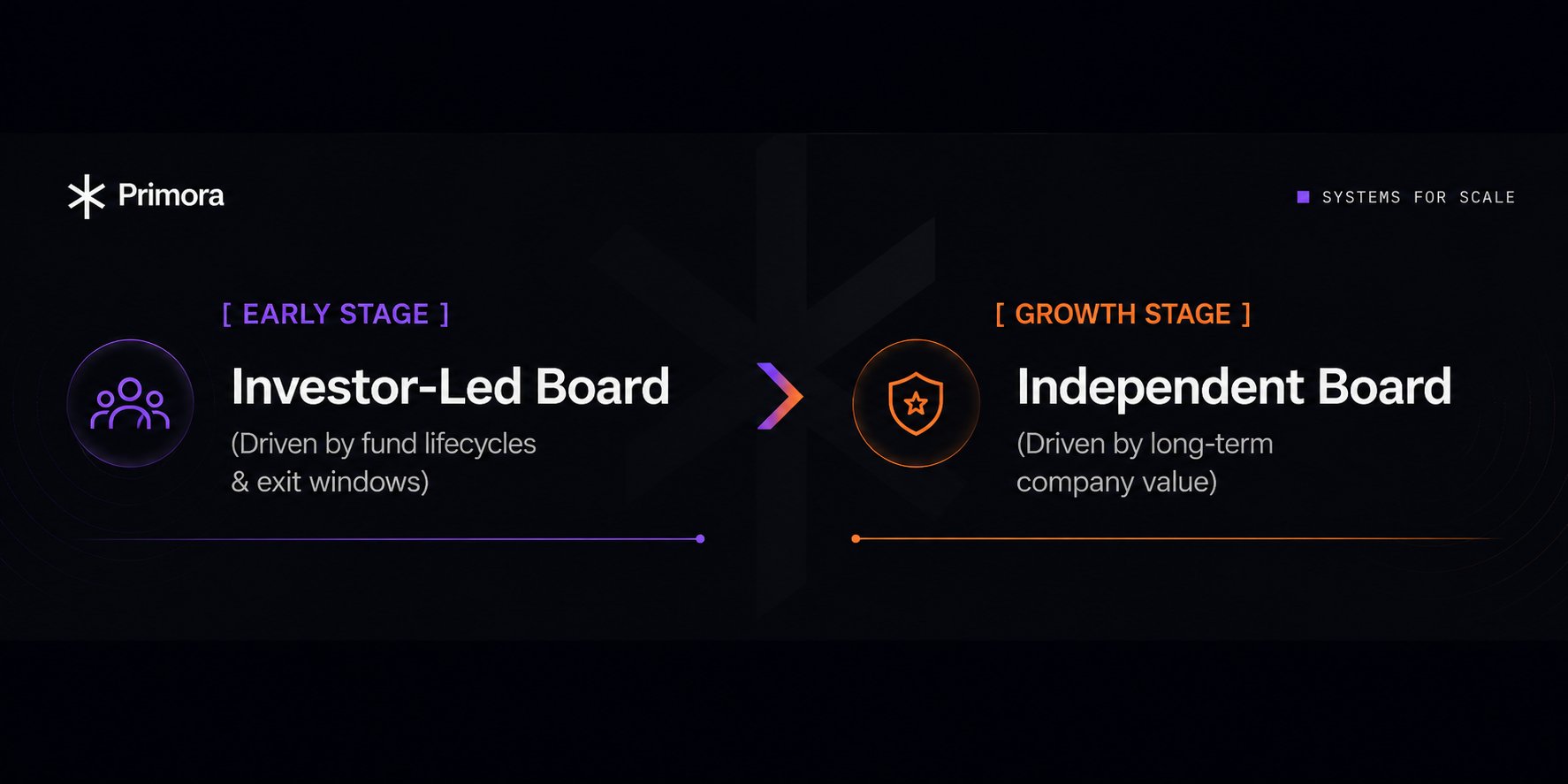
To survive the scaling phase, research highlights the necessity of transitioning toward an independent board.
It’s a tough truth to swallow, but an investor’s fund metrics, liquidity deadlines, and portfolio strategies are their business, not yours. An independent board gives the executive team a shield, ensuring that major strategic pivots are made because they make objective sense for the business, not because a VC fund needs a quick win for their limited partners.
Culture: The Remote-First Growth Engine
While big tech companies are busy fighting ugly PR battles over rigid Return-to-Office (RTO) mandates, JumpCloud scaled past 1,000 employees across 20 time zones without a single corporate office mandate.
Building a high-performing distributed team is a strategy; it requires intentional connection.
Values Over Real Estate: Culture isn't born in a cool office space or around a ping-pong table. It's built through how people treat each other and how they execute under pressure.
Documentation Over Meetings: To make remote work actually work, you have to ruthlessly kill unnecessary Zoom calls and replace them with clear, transparent documentation and ownership.
The Global Talent Pool: Restricting your hiring to a 30-mile radius around an expensive tech hub is a massive handicap. Going remote-first lets you hire the absolute best minds on the planet, giving you a leaner, more diverse, and incredibly agile workforce.
Mindset: The Professional Athlete Mentality
Too many founders treat entrepreneurship like a lottery ticket, hoping for that one viral growth hack or lucky break to change everything. Bhargava’s operational philosophy argues that sustainable scaling looks much more like professional athletics.
Obsess Over the Basics: Just like a pro athlete spends hours drilling the fundamentals, a founder has to relentlessly focus on the unsexy stuff: unit economics, customer retention, and clean code.
It’s an Endurance Game: Hyper-growth is a marathon made up of thousands of tiny, disciplined actions. If you treat it like a mad sprint to the next funding round, you’ll burn out your team and break your product before you ever hit real scale.
Innovation: Beyond the AI Hype Cycle
Right now, the temptation to slap an API wrapper on a product and call it an "AI company" just to juice a valuation is incredibly high. JumpCloud's approach warns against this trap, pushing instead for building an AI-native culture.
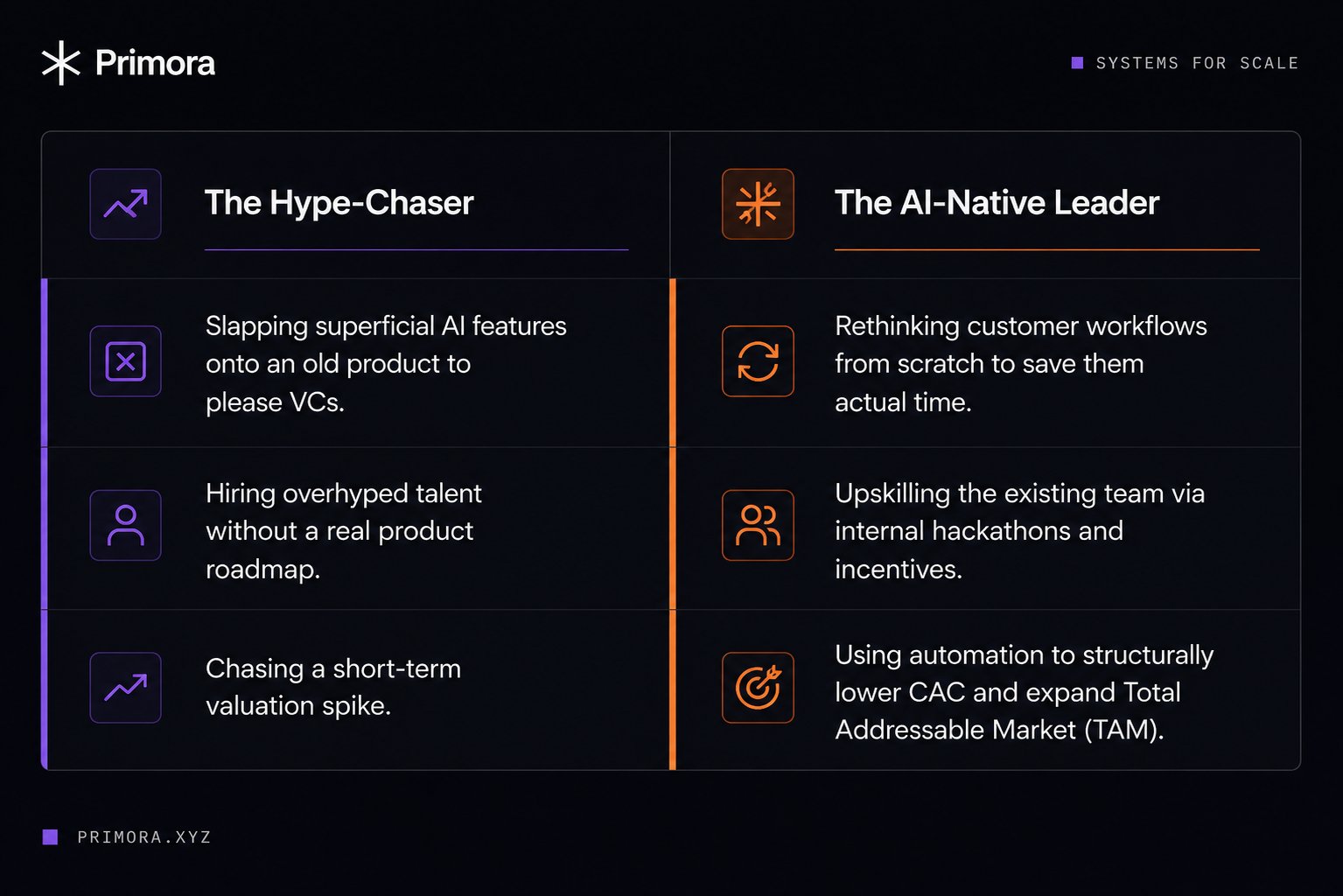
To win the AI shift, leaders must stop asking how AI can make their next pitch deck look great. The real question is how machine learning can fundamentally cut a customer's time-to-value in half.
Real growth isn't about copying the loud trends coming out of Silicon Valley. It’s about building a resilient, adaptable machine. By offering true market choice, protecting your governance, leveraging global talent, drilling the fundamentals, and using technology to solve real human problems, you build something that lasts.







Build beyond the current cycle
Markets move. Interfaces evolve. Incentives shift. What endures is structure. If your ambition extends past momentum,