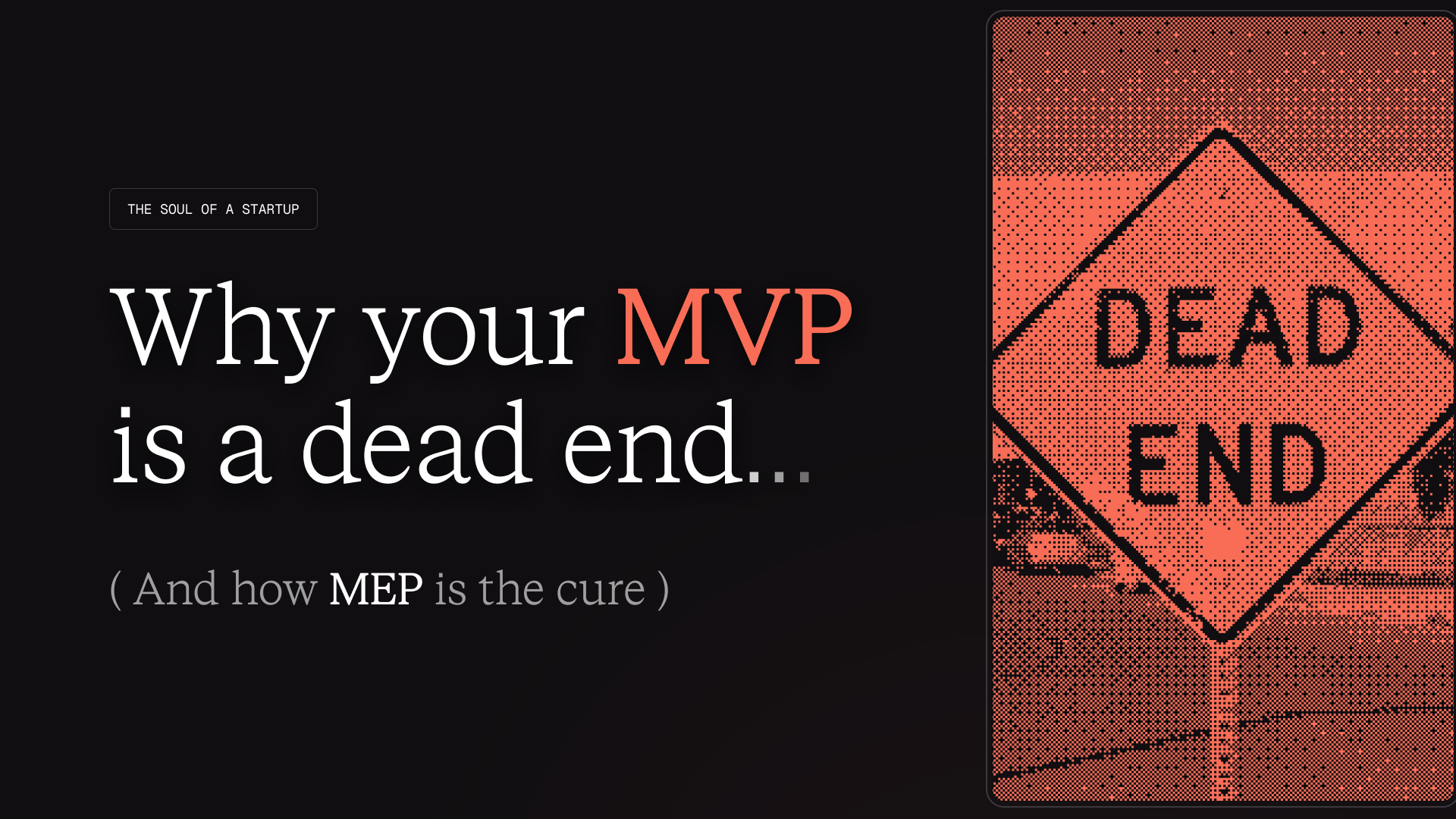
The Soul of a Startup: Why Your ‘MVP’ Is a Dead End (and MEP Is the Cure)
Most early products fail not because of poor execution, but because they're built to validate rather than evolve. The MEP framework is the solution.
We’ve all been sold the "MVP" dream: build the smallest thing, ship it, and watch the world beat a path to your door. But in reality, most MVPs are clinical, cold, and, frankly, uninspiring. They are built to "verify a hypothesis," which sounds like a lab experiment.
The problem is that markets aren't labs. They are ecosystems. If you want to survive, you don't need a "Viable" product; you need an Evolvable one.
The Minimum Evolvable Product (MEP) isn’t just a list of features; it’s a flexible builders model. It’s an "amoeba" that is simple enough to be flexible, but hungry enough to grow toward the light of user demand.
Most founders spend their early days trying to convince people to care. That is an exhausting, uphill battle. Building an MEP requires a shift in mindset: Your launch isn't a marketing problem; it's a search problem.
You aren’t looking for "customers" yet. You are looking for True Believers, the "Gustafs" and "Ankits" who are currently using three different spreadsheets and a prayer to solve the problem you’re tackling. These people don’t care if your UI is ugly or if your "About Us" page is a broken link. They care about the fix.
If you find yourself having to spend $10,000 on Facebook ads just to get someone to click, you haven't found your believers. You’ve found a crowd you’re trying to bribe.
The Strategic Funnel: Using ‘Free’ as a Tactic
While "Free" can generate noise, it is a powerful psychological lever when used as a gesture of goodwill or a data-gathering tactic. In the AI and SaaS era, "Free" isn't the destination, it’s the top of the attentional funnel.
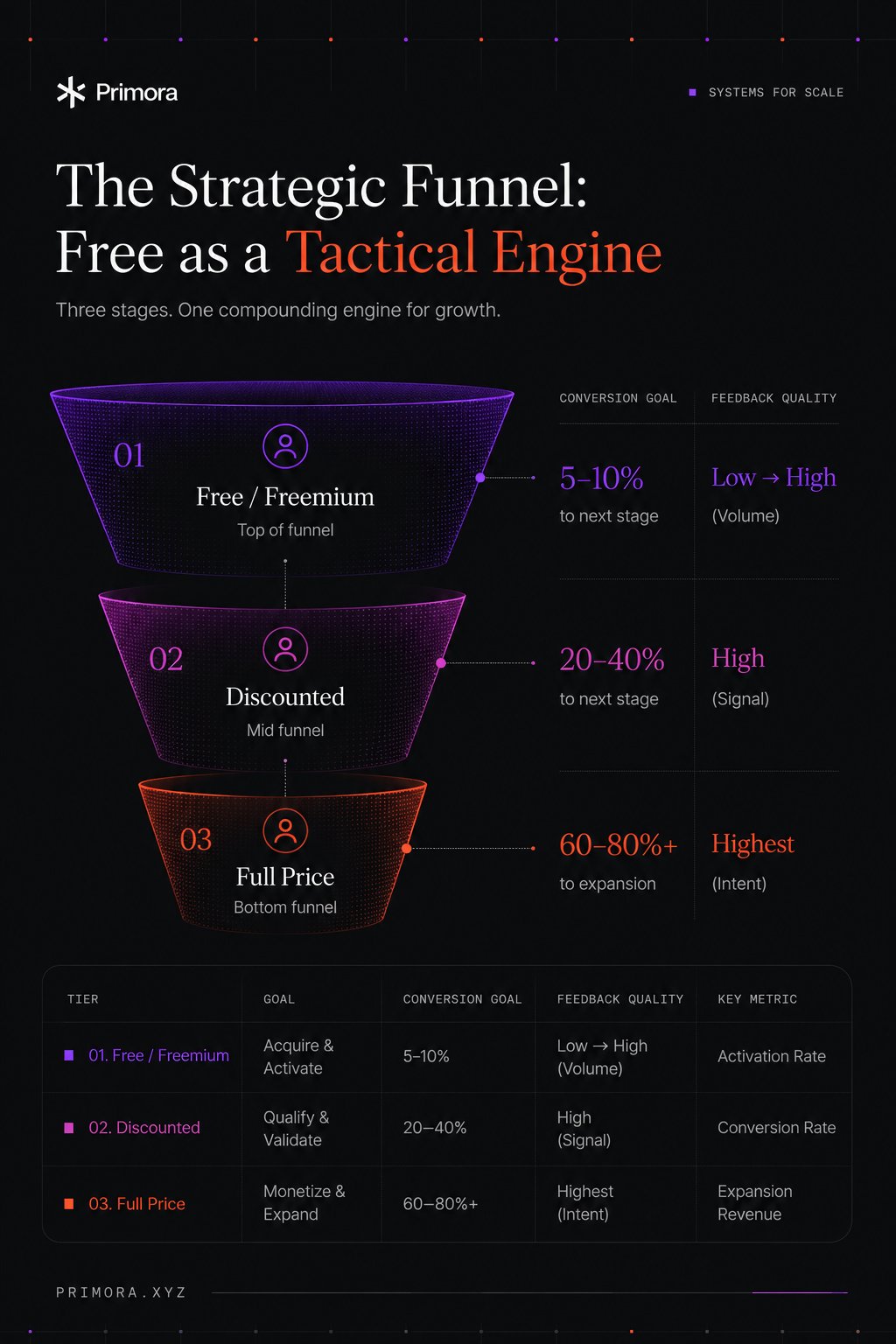
Look at the traditional growth hierarchy:
The Free Tier (The Habitat): This is where you capture the environment. It lowers the barrier to entry, allowing the "amoeba" to interact with as many users as possible.
The Discounted Tier (The Adaptation): This is where you test price sensitivity.
The Full Price (The Selection): This is where the True Believers reside.
Case Study: Midjourney
While competitors spent millions building sleek web interfaces (the "Traditional MVP" approach), Midjourney launched exclusively inside Discord.
This was a strategic choice to ensure Maximum Evolvability.
The Tactic: By launching in a social chat environment, they turned product usage into a spectator sport. Users saw what others were prompting, learned in real-time, and evolved their own techniques.
The Result: Midjourney reached $200M+ in annual revenue with a team of only about 11 people, without a single dollar of Venture Capital.
The Data: Research into AI growth loops shows that Midjourney’s "Free-to-Paid" funnel is one of the most efficient in history. By giving users 25 free image generations in 2022, they created a "Taste Test" that converted at nearly 3x the industry average for SaaS once users hit the "True Believer" paywall.
Rather than trying to drag users to a new platform, Midjourney built a tool that lived where people already hung out. They treated their free tier as a strategic engine for social proof. In their world, a free image isn't a gift, it's a high-visibility ad that makes the paid tier feel like the only logical next step.
The Anthropology of the "Amoeba"
In the MEP framework, you are less of a CEO and more of an anthropologist. You shouldn’t just look at data dashboards; you should be watching how your users live.
Why does a user click a button and then hesitate? Why did they churn after three days?
In a massive corporation, churn is a failure to be managed. In an MEP, churn is a mutation.
It tells you exactly where your product is hitting a wall in the real world.
Small startups have one superpower: they can fail fast and cheap. A big company can't afford to look stupid. You can. Embrace the messy, low-stakes experiments that allow your product to evolve.
Path Dependency: You Are Your First 10 Users
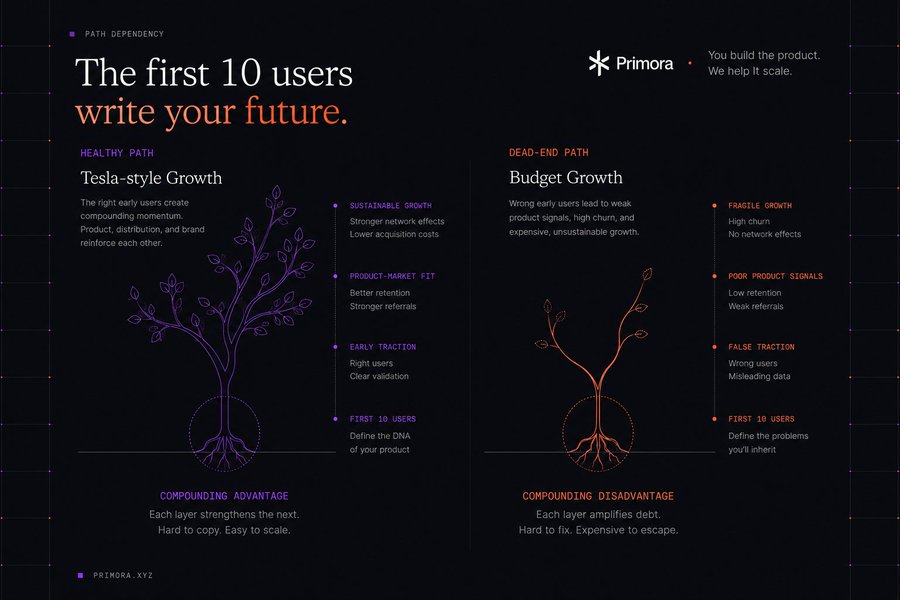
Every founder thinks they can "pivot" later. But products are like trees, the way the trunk grows in the first year determines where the branches can go in year ten. This is Path Dependency.
Look at Tesla.
If they had started by trying to build a $20,000 commuter car, they would have been forced to optimize for cost-cutting, cheap materials, and mass-market safety standards. They would have evolved into a "Budget Car Company."
Instead, they built the Roadster. It was expensive and niche. It attracted early adopters who valued acceleration and high-tech gadgetry. That "genetic code" flowed directly into the Model S and the Model Y. Because their first 10 customers were tech-forward elites, Tesla had to evolve into a tech-forward powerhouse.Your first 10 customers are the DNA of your future company. Choose them carefully.
Forget Perfection, Chase the Loop
The MVP asks: "Is it viable?"
The MEP asks: "Is it learning?"
Founder’s Reflection: 3 Market Questions
If you are currently refining your product, ask yourself these three questions to see if you are building an MEP:
The "Pain" Litmus Test: Are your first 10 users using the product despite its flaws, or are you constantly apologizing for the lack of a workable system to keep them interested?
The Genetic Ancestry: If your current top 5 users defined your roadmap for the next two years, would you end up in a high-value market, or a niche corner you can't escape?
The Friction Factor: What happens to your user growth if you double your price tomorrow? (If everyone leaves, do you have a "utility"?; if your core stays, you have an "evolvable" foundation).
The Shift: From Monument to Movement
Most founders fail because they try to build a monument, something rigid, impressive, and finished. But in a market that moves as fast as ours, monuments just become expensive ruins.
The goal of your first year isn't to be right; it’s to be adaptable. The MVP asks, "Can this exist?" while the MEP asks, "Can this learn?"
By treating "Free" as a strategic net rather than a giveaway, and by obsessing over the "True Believers" who would pay for your product even if the UI was broken, you aren't just building an app. You are cultivating a genetic code that is designed to survive contact with reality.
Most founders fail because they wait for "ready," treating their product like a finished statue to be judged. But in a market that moves this fast, perfection is just a hedge against the fear of being wrong.
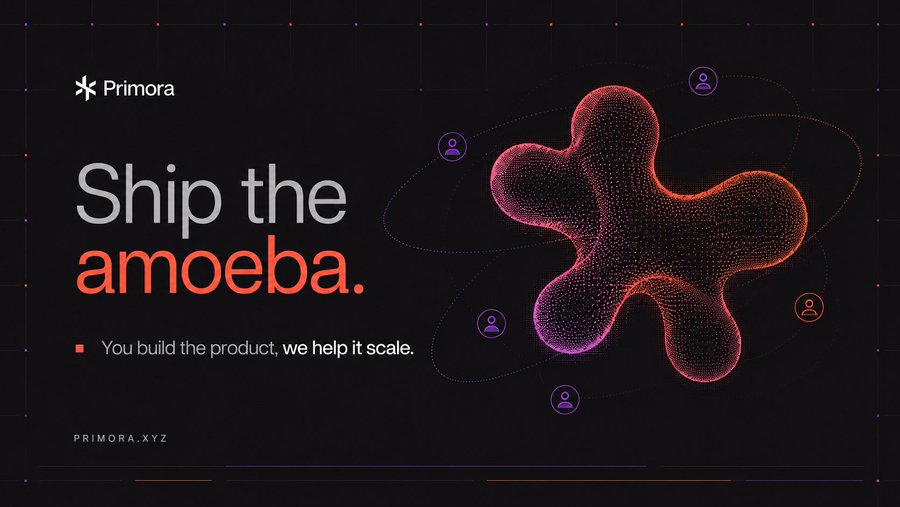
If you want to survive, you must ship the "amoeba", a product that is simple, fluid, and hungry for feedback. Your goal isn't to be right on day one; it’s to build a loop that allows you to adapt faster than the competition.
Don’t wait for perfection. Chase evolution.
Build beyond the current cycle
Markets move. Interfaces evolve. Incentives shift. What endures is structure. If your ambition extends past momentum,