Stop Building Startups Backwards: 10 Lessons Every Founder Should Know Before Writing a Line of Code
Most startups fail not from lack of talent, but from solving problems in the wrong order. These 10 lessons reframe how founders should think before building anything at all.



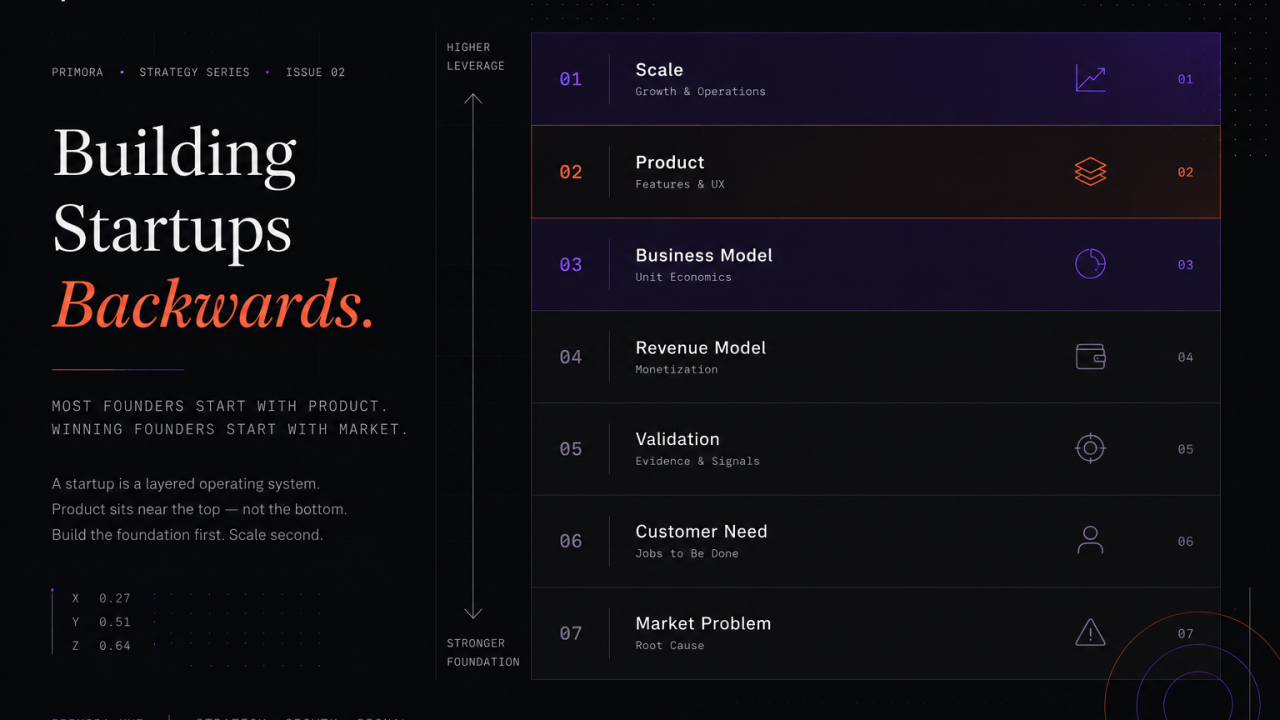
"The biggest risk in a startup isn't building something that doesn't work. It's building something nobody actually needs."
Every year, thousands of founders begin their entrepreneurial journey with excitement, ambition, and what they believe is a groundbreaking idea.
They spend months designing logos, building products, hiring developers, raising capital, and polishing pitch decks.
Then reality arrives.
Customers don't buy.
Investors lose interest.
The product that seemed revolutionary becomes another forgotten startup.
The hard truth is that most startups don't fail because founders lack intelligence or technical ability. They fail because they solve problems in the wrong order.
Successful founders don't start by asking:
"What should I build?"
They start by asking:
"What business deserves to exist?"
Here are ten lessons that can dramatically increase your chances of building a company people actually want.
1. Your Idea Isn't Your Business
Founders often become emotionally attached to their product idea.
But customers don't buy ideas.
They buy solutions.
History is full of companies with average products but exceptional business models, while countless brilliant inventions disappeared because no sustainable business existed around them.
Instead of obsessing over features, begin with questions like:
- What painful problem exists?
- Who experiences this problem every day?
- How are they solving it today?
- What are they already paying?
- Why would they switch to my solution?
- Can this business scale repeatedly?
Ideas are plentiful.
Business models are rare.
Your competitive advantage isn't having an idea.
It's designing a business that consistently creates and captures value.
2. Build Last, Not First
Most founders follow this path:
Idea → Build → Launch → Hope someone buys.
Unfortunately, hope isn't a business strategy.
A smarter sequence looks like this:
Idea → Demo → Sell → Build.
This approach feels uncomfortable because you're selling before the product exists.
But that's exactly why it works.
If customers won't pay after seeing a compelling demonstration of the value, there's little reason to believe they'll pay once you've spent six months building it.
Modern startups have more validation tools than ever before.
You can test demand using:
- Landing pages
- Interactive prototypes
- Design mockups
- Explainer videos
- Concierge services
- Manual workflows behind the scenes
The goal isn't deception.
The goal is learning whether people genuinely want the outcome you're promising before investing heavily in building it.
3. Customer Opinions Are Cheap. Customer Commitment Isn't.
One of the biggest mistakes founders make is asking the wrong questions.
Questions like:
"Would you use this?"
"Would you buy this?"
Almost always produce optimistic answers.
People naturally want to encourage entrepreneurs.
But encouragement doesn't pay invoices.
Instead, ask questions that require commitment.
Can they:
- Schedule a pilot?
- Join a waitlist?
- Introduce you to a decision-maker?
- Sign a Letter of Intent?
- Pre-order?
- Pay a deposit?
Actions reveal reality.
Words only reveal intentions.
Your startup should measure behavior, not compliments.
4. Your First Ten Customers Matter More Than Your First Thousand Users
Many founders chase user growth.
The best founders chase paying customers.
These aren't the same thing.
Thousands of free users can make you feel successful while teaching you the wrong lessons.
Free users often request more features because they have nothing invested.
Paying customers focus on outcomes because they're spending money.
Your first ten customers should be carefully selected.
They should:
- Have the problem today
- Feel significant pain
- Be actively searching for solutions
- Be willing to pay immediately
- Provide detailed feedback
Those first ten customers become your product advisors.
Not because they're numerous.
Because they're invested.
5. Revenue Solves Problems That Funding Can't
Raising venture capital has become a milestone many founders celebrate.
But funding is not proof of product-market fit.
Revenue is.
Revenue tells you:
- Your solution creates value.
- Someone trusts you enough to pay.
- The problem is real.
- Your pricing works.
- Your market exists.
Funding simply means investors believe your business might become valuable.
Customers remove the "might."
Before chasing investors, challenge yourself to earn your first paying customers.
Revenue builds confidence.
Funding builds expectations.
One validates your customers.
The other validates your pitch.
6. Choose Co-Founders Like You're Choosing a Life Partner
Most successful startups aren't built alone.
But choosing the wrong co-founder can destroy a promising company faster than poor product decisions.
Before dividing equity or incorporating, work together.
Build something small.
Run a side project.
Solve difficult problems together.
Observe how each person handles:
- Stress
- Conflict
- Deadlines
- Feedback
- Decision-making
Skills can be learned.
Character usually doesn't change.
Great co-founders aren't simply talented.
They're aligned.
7. Customers Don't Want Better Products. They Want Better Lives.
People don't buy software.
They buy: saved time.
They don't buy accounting tools.
They buy peace of mind.
They don't buy AI.
They buy productivity.
Founders often focus on improving features.
Customers focus on improving outcomes.
Instead of asking:
"How can I make my product better?"
Ask:
"How can I make my customer more successful?"
The companies that dominate markets don't simply build better tools.
They help customers become better versions of themselves.
8. Planning Is Important. Perfection Is Expensive.
Many founders spend months preparing.
Business plans.
Financial models.
Competitive analysis.
Pitch decks.
Brand guidelines.
Then they launch.
Only to discover they built around incorrect assumptions.
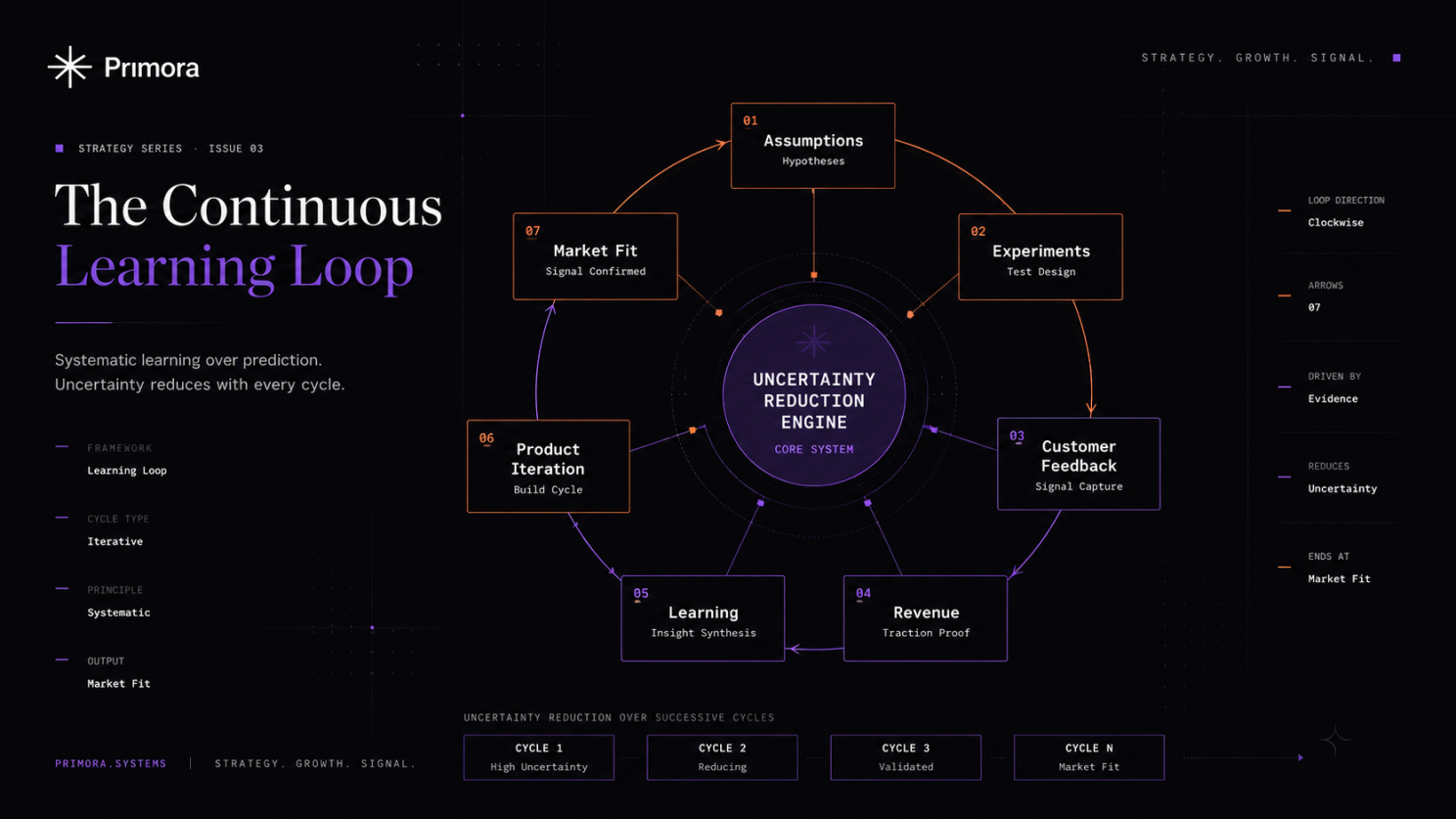
Planning should reduce uncertainty.
Not delay action.
Every startup contains unknowns.
The only reliable way to eliminate them is through customer interaction.
Execution creates clarity.
Waiting rarely does.
9. Happy Customers Are the Only Sustainable Growth Engine
Growth hacks come and go.
Algorithms change.
Advertising becomes more expensive.
One thing never changes:
Satisfied customers recommend products they genuinely love.
Instead of obsessing over acquisition, optimize this loop:
Acquire → Deliver Value → Retain → Encourage Referrals
When customers repeatedly achieve success using your product, growth becomes significantly easier.
Retention compounds.
Referrals multiply.
Acquisition becomes cheaper.
Marketing becomes more authentic.
Great startups don't manufacture hype.
They manufacture customer success.
10. There Will Never Be a Perfect Time
Many founders tell themselves:
"I'll start after I save more money."
"I'll launch next year."
"The market isn't ready."
"I'm waiting for better timing."
The reality is simple.
The market rarely feels ready.
Founders become ready through action.
Every successful startup began with uncertainty.
Waiting doesn't eliminate risk.
It only delays learning.
The best time to validate your idea was months ago.
The second-best time is today.
The Founder Mindset That Changes Everything
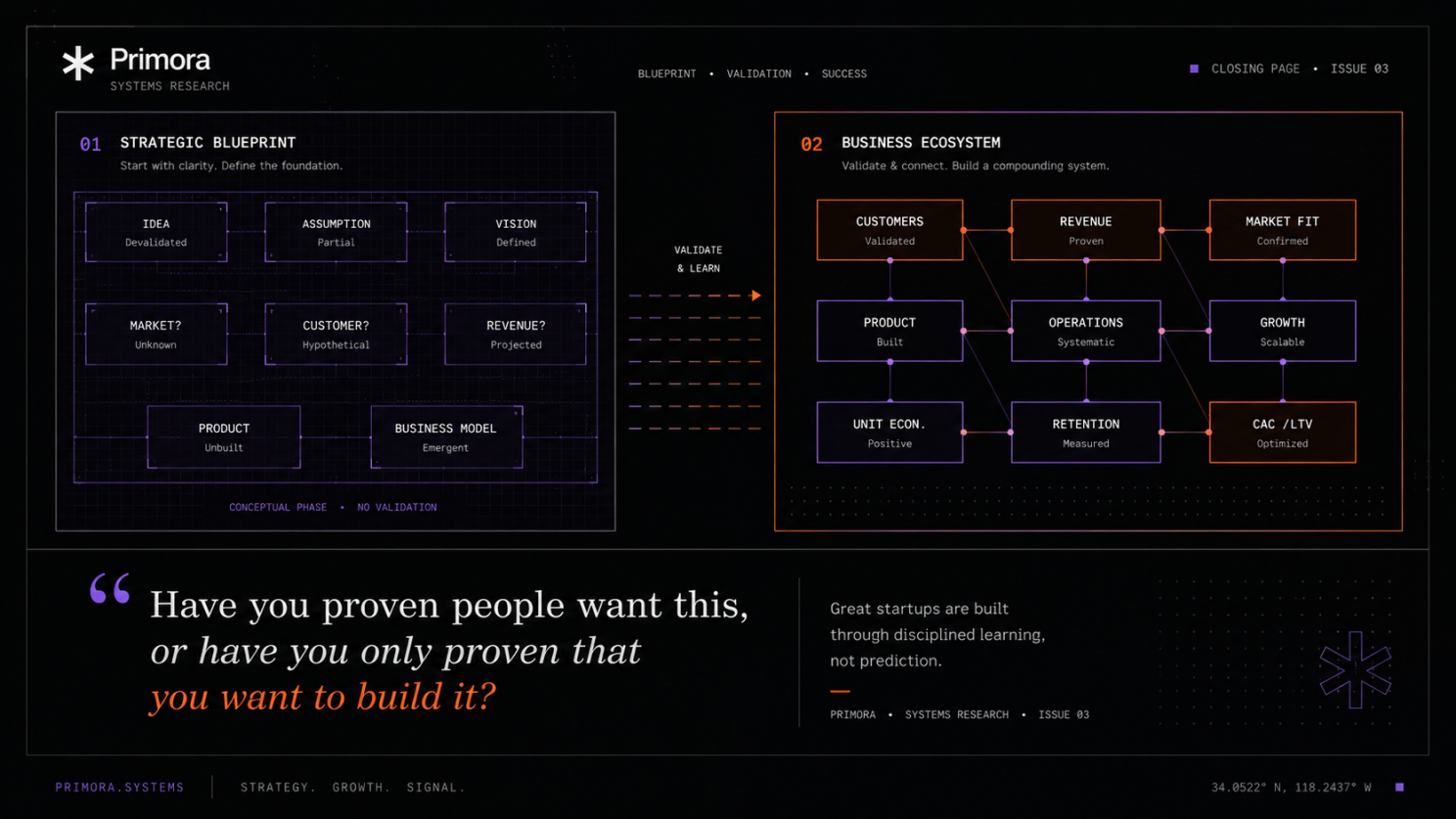
Building a startup isn't about predicting the future.
It's about reducing uncertainty one experiment at a time.
Every customer conversation should teach you something.
Every sale should validate an assumption.
Every failure should improve the next iteration.
The founders who succeed aren't always the smartest or the best funded.
They're the ones who learn the fastest.
Before writing your next line of code, ask yourself one question:
Have I proven people want this, or have I only proven that I want to build it?
That single question can save months of wasted effort, thousands of dollars, and may ultimately determine whether your startup becomes another abandoned idea, or a business people genuinely can't live without.






Build beyond the current cycle
Markets move. Interfaces evolve. Incentives shift. What endures is structure. If your ambition extends past momentum,