Why Your "Perfect Launch" Is Quietly Killing Your Startup
A cross-analysis of 500+ startup post-mortems shows that most early-stage failures aren't engineering problems — they're the direct cost of building in isolation and waiting too long to ship.

A macro-analysis of over 500 startup post-mortems conducted by CB Insights reveals a stark, mathematical pattern in venture failure: 42% of early-stage companies collapse due to a fundamental lack of market need, while 29% fail because they prematurely exhaust their cash reserves.
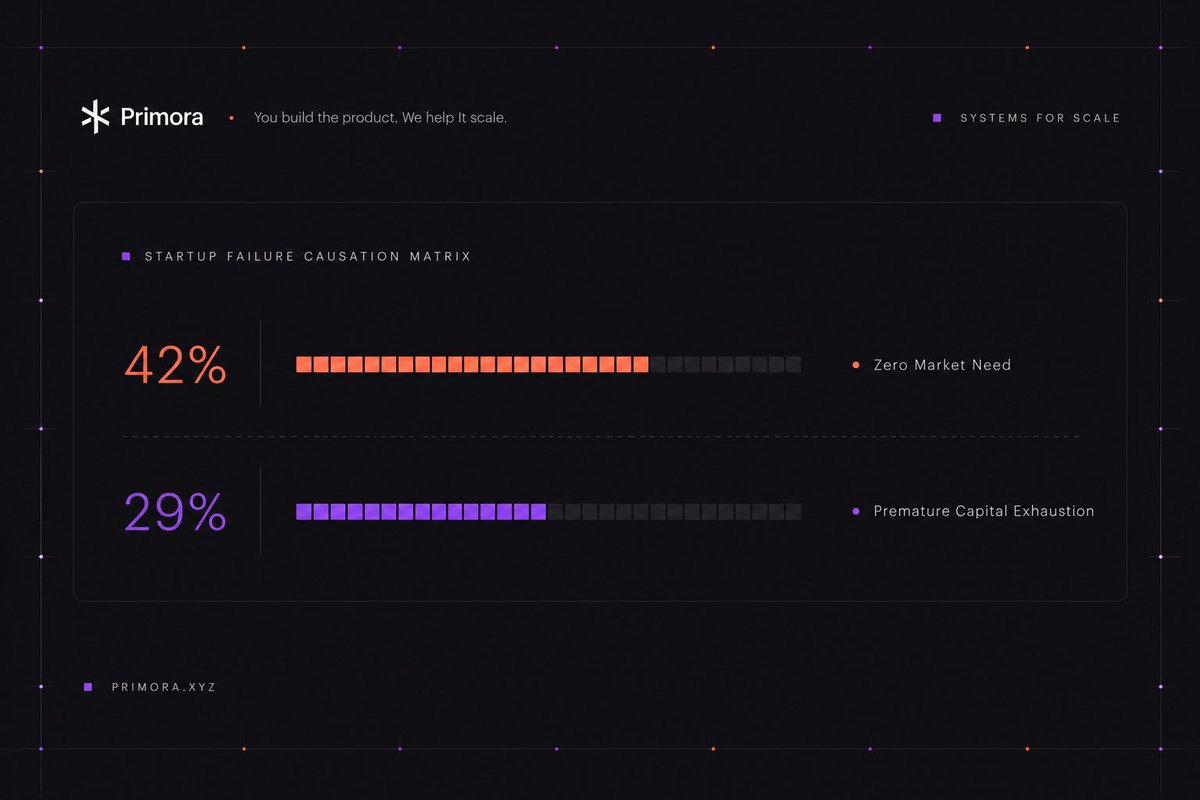
Further academic research from Harvard Business Review indicates that upwards of 75% of venture-backed startups fail to return capital. When these data sets are cross-referenced, a clear operational correlation emerges:
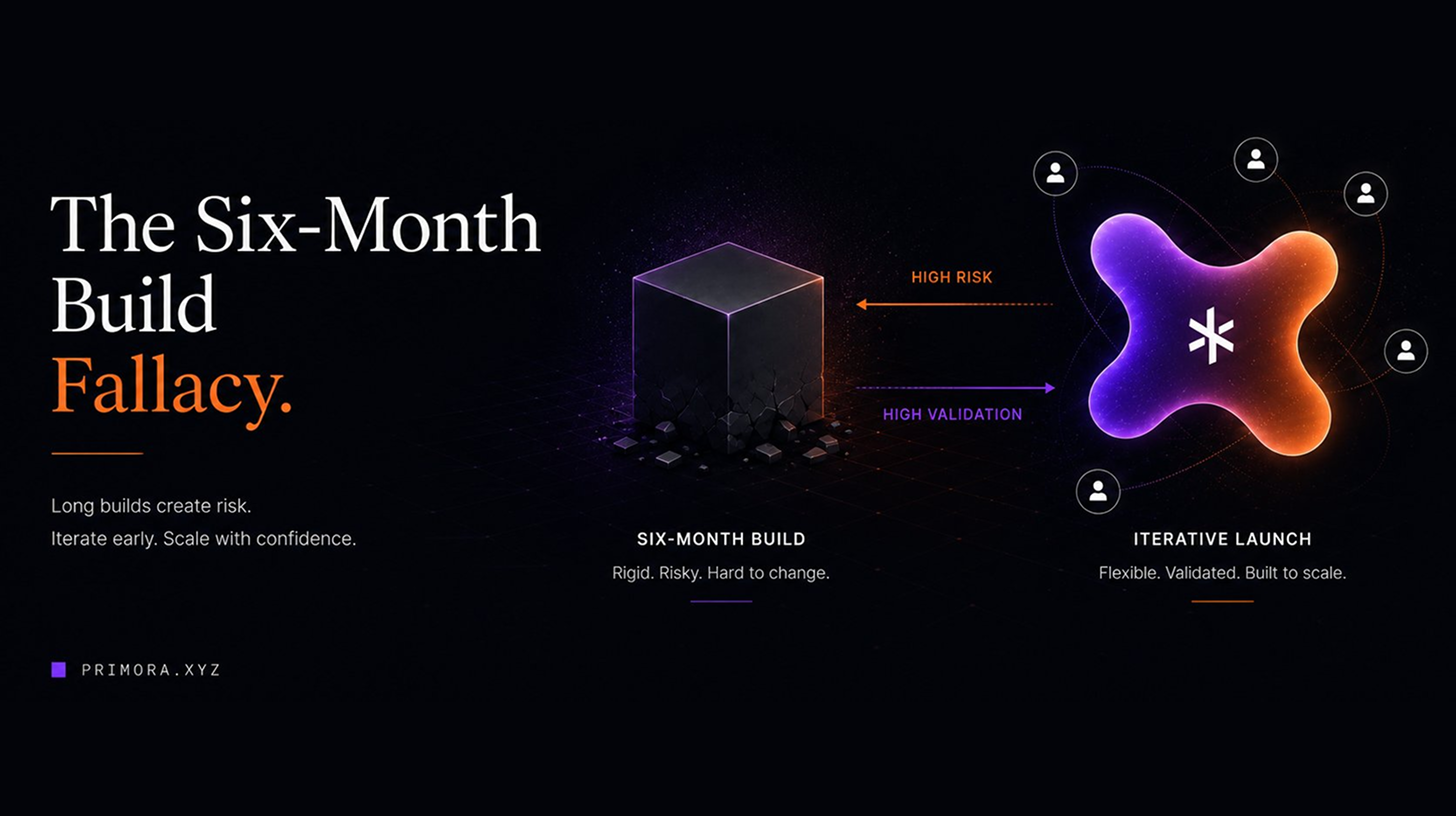
early-stage failure is rarely a failure of engineering execution. It is the direct economic cost of the "six-month build" fallacy.
We’ve watched too many sharp founders pour two to three consecutive quarters of engineering runway into a “perfect” product only to watch it flop the moment it hits the market. They treated the launch like a Hollywood premiere: polished decks, dramatic reveals, and the quiet hope that users would flood in.
That’s not bad luck. That’s the structural risk of building in a vacuum.
The mathematical reality of venture velocity can be modeled using a foundational framework:
Venture Velocity = Information Signal Clarity × Speed of Deployment Cycle.
Every week a product remains insulated from the market, the variance between developer assumptions and market realities expands exponentially. Your capital evaporates on features nobody asked for.
The fix isn’t a bigger marketing budget or a prettier deck. It’s shifting from “one perfect launch” to continuous, iterative shipping. Treat your startup like a lab and every release as an experiment that generates real data.
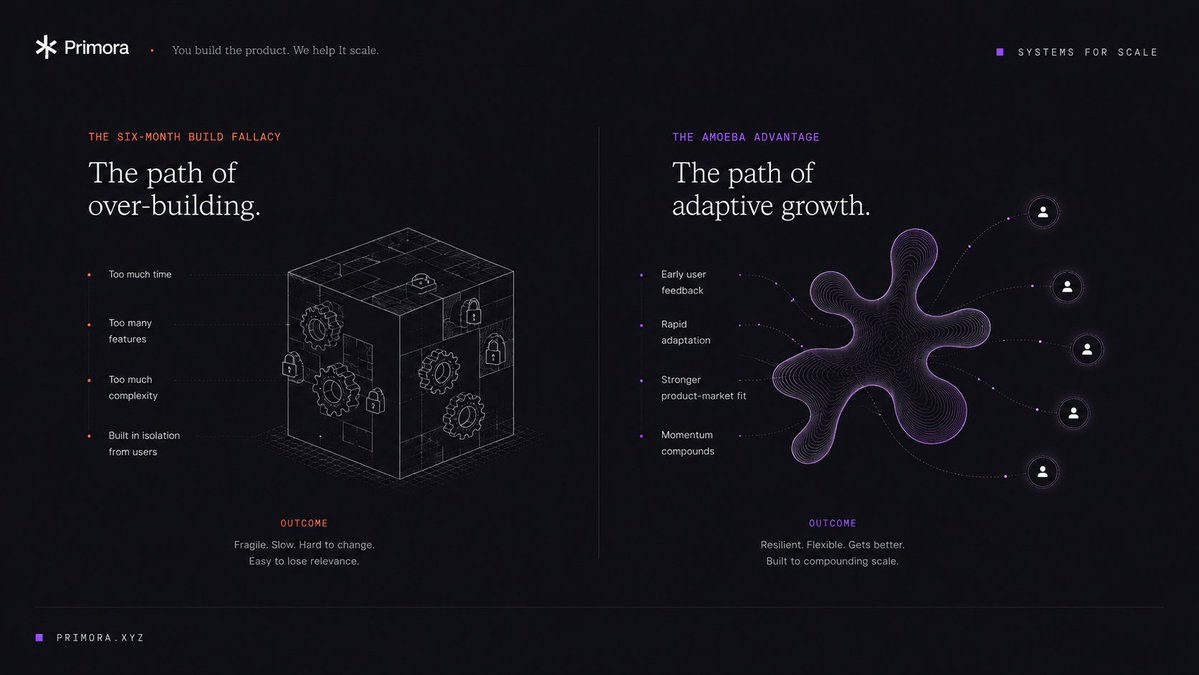
Here’s a battle-tested framework that de-risks the build and drives high-intent growth, drawn from what actually works in the trenches.
Craft a High-Signal Pitch (Ditch the “Why” for Now)
Attention on the internet is brutal and fleeting. Clarity beats storytelling when you’re fighting for that first 5–10 seconds.
Founders often lead with vision, backstory, or buzzwords (“revolutionary AI-powered synergistic ecosystem”). It feels inspiring in the mirror. It confuses everyone else.
Kill the fluff. Users need to instantly categorize what you do. If they can’t, your positioning fails.
The “X for Y” Rule, use it only if:
- X is a household name (Uber, Amazon, Notion).
- Y is a massive, obvious market.
- The analogy is immediately self-evident.
Low-signal example: “An AI-powered synergistic ecosystem for workplace optimization.”
High-signal example: “Syncs Figma components straight into your React codebase with zero manual rework.”
One lets users nod and move on. The other sparks “I need this yesterday.”
Engineer High-Intent Launch Channels
Broad awareness campaigns burn cash with low signal. Target tight, high-intent channels instead.
Tier 1: The Silent Launch
Build a clean, high-fidelity landing page before heavy coding. High-signal headline, feature breakdown, strong CTA (email opt-in or early access). Drive targeted traffic. If it doesn’t convert on a static page, more code won’t save you. This is your first real A/B test.
Tier 2: Do Things That Don’t Scale
Early qualitative data is gold.
The DoorDash founders didn’t start with sophisticated routing algorithms, they manually took orders, drove food themselves, and lived the friction. That hands-on work gave them the exact insights needed to automate profitably later.
Manual work feels unglamorous, but it’s how you avoid building the wrong thing at scale.
Tier 3: High-Intent Communities
Hacker News, niche Discords, relevant subreddits, or professional forums. Post as an ongoing engineering project, not polished marketing. Invite brutal feedback. Respond instantly. Radical transparency wins trust and turns critics into early users. Many strong products have gained real traction this way when treated as conversations, not billboards.
The Core Distribution Channels to Target:
- Hacker News: Submit as a "Show HN" text post, prioritizing an open engineering breakdown of how you solved a highly specific technical bottleneck.
- Reddit & Subreddits: Target developer and founder micro-communities (e.g., r/SaaS, r/webdev, or niche problem-focused spaces) with text-only write-ups focusing on - code architecture or raw workflow solutions.
- Niche Discords & Slack Groups: Join vetted, high-signal groups where your exact buyer profile hangs out to talk, answering technical questions to earn the right to share your tool.
- Private Founder Networks: Leverage closed internal platforms to secure high-intent peer reviews and initial cross-founder platform integrations.
- Professional & Industrial Forums: Target sector-specific spaces (like Indie Hackers, GrowthHackers, or specialized legacy trade forums) where users explicitly complain about workflow bottlenecks.
Escape the Waitlist Trap
Waitlists create nice vanity metrics and initial hype. But they’re dangerous if you let them sit. User excitement decays fast, roughly 60% lower after 30 days, and much worse after 90.
Leads go cold. You get false confidence while true demand signals hide.
The fix: Aggressive velocity. Move sign-ups into small onboarding cohorts as fast as possible. Deliver value immediately, even if it’s manual, limited, or imperfect. Shorten the gap between interest and experience.
Ship Like a Scientist
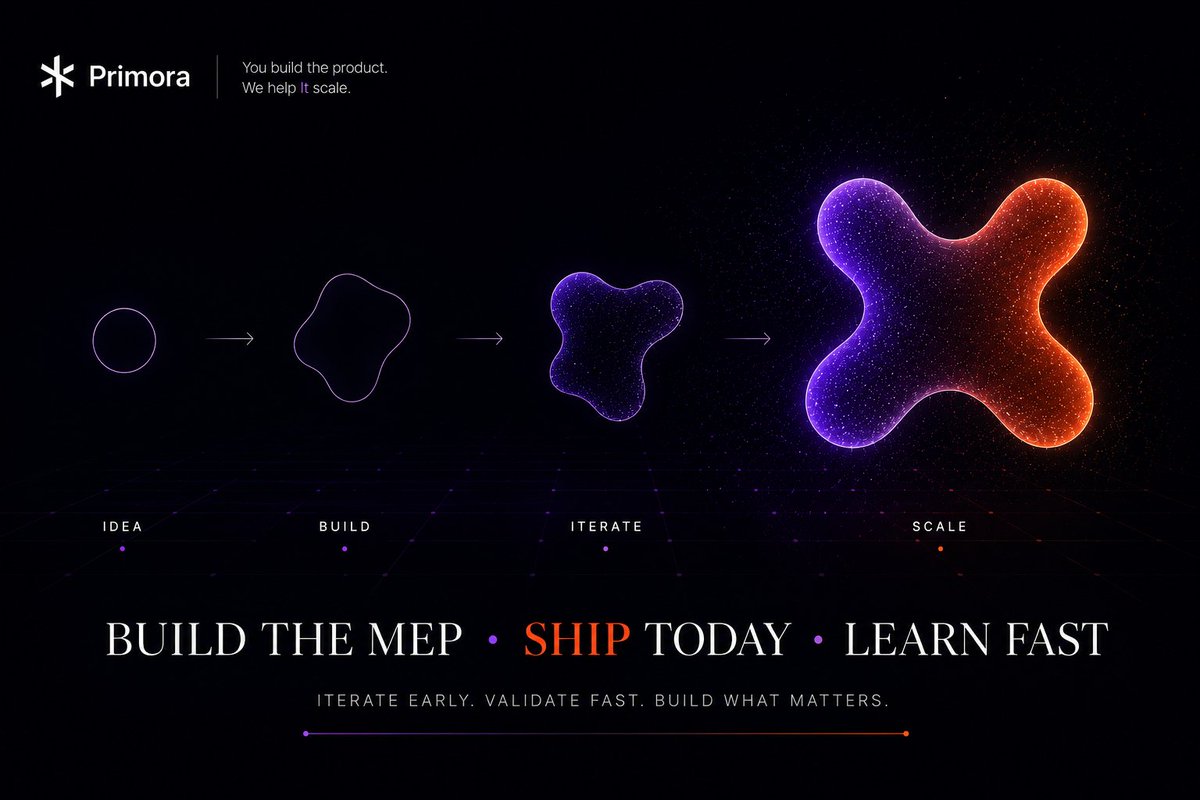
Your product isn’t a static masterpiece. It’s a living experiment. Every landing page tweak, micro-launch, community thread, and user conversation is data.
Founders who commit to continuous shipping, cut the jargon, and validate demand in real time preserve runway and build momentum that compounds. Those chasing perfection in isolation join the 42% statistic {userintuition.ai}.
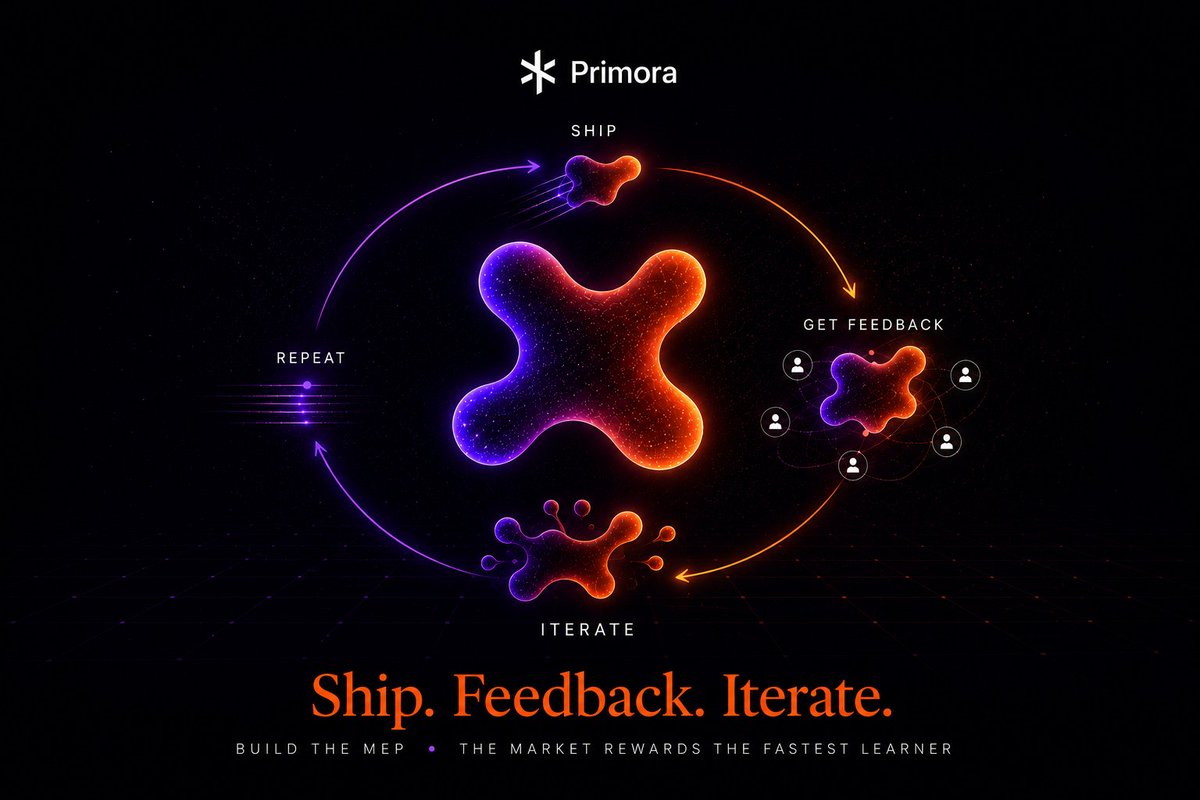
Stop waiting for the perfect moment. Ship something today. Get feedback. Iterate brutally.
That’s how real traction happens,not in one dramatic reveal, but through relentless, evidence-based progress.
Perfection is a lagging indicator, whereas velocity is your only true leading indicator. Your product is not a static masterpiece; it is a living, breathing experiment.
Dead startups rely on six-month silent builds that lead straight to a 42% market mismatch, while live startups use landing pages to capture real-time feedback and fuel aggressive iteration. Stop waiting for the perfect moment, let the market bruise your ego, and ship something today.
Drop your current 1-sentence value prop in the replies below.
If we can't understand exactly what your product does within 5 seconds, we will give you professional market feedback.







Build beyond the current cycle
Markets move. Interfaces evolve. Incentives shift. What endures is structure. If your ambition extends past momentum,