The New Founder Playbook: Alexandr Wang on Agent Swarms and the Future of Startups
Alexandr Wang says autonomous AI agents have rewritten the rules of building a startup. Small teams can now match enterprise execution. Here is the framework he shared at YC Startup School 2026.



At YC Startup School 2026, Alexandr Wang, founder of Scale AI and lead of Meta’s Superintelligence Labs, delivered a strategic blueprint for the next generation of founders. His core assertion was direct: autonomous AI agents have fundamentally rewritten the operational physics of building a technology company.
For decades, early-stage startups compensated for their lack of capital, talent, and infrastructure through speed, hyper-focus, and relentless execution. Today, multi-agent systems allow lean teams to operating at execution scales previously reserved for enterprise tech giants.
This guide breaks down Wang’s strategic framework for founders, examining the shift from manual coding to agent orchestration, Meta’s vision for personal superintelligence, and how to maintain internal conviction in a noisy market.
The Strategic Shift: Goliath vs. Goliath Mechanics
The classic startup narrative pitted a lean, agile "David" against an entrenched "Goliath." Incumbents held the structural advantages in capital, distribution, and operational capacity, while startups relied on adaptability and focus to capture market share.
Wang argues that autonomous AI agents have dismantled this operational asymmetry. When a three-person startup can design, deploy, and manage an infrastructure of specialized AI agents to handle engineering, user research, customer operations, and growth analytics, headcount is no longer the primary constraint on execution.
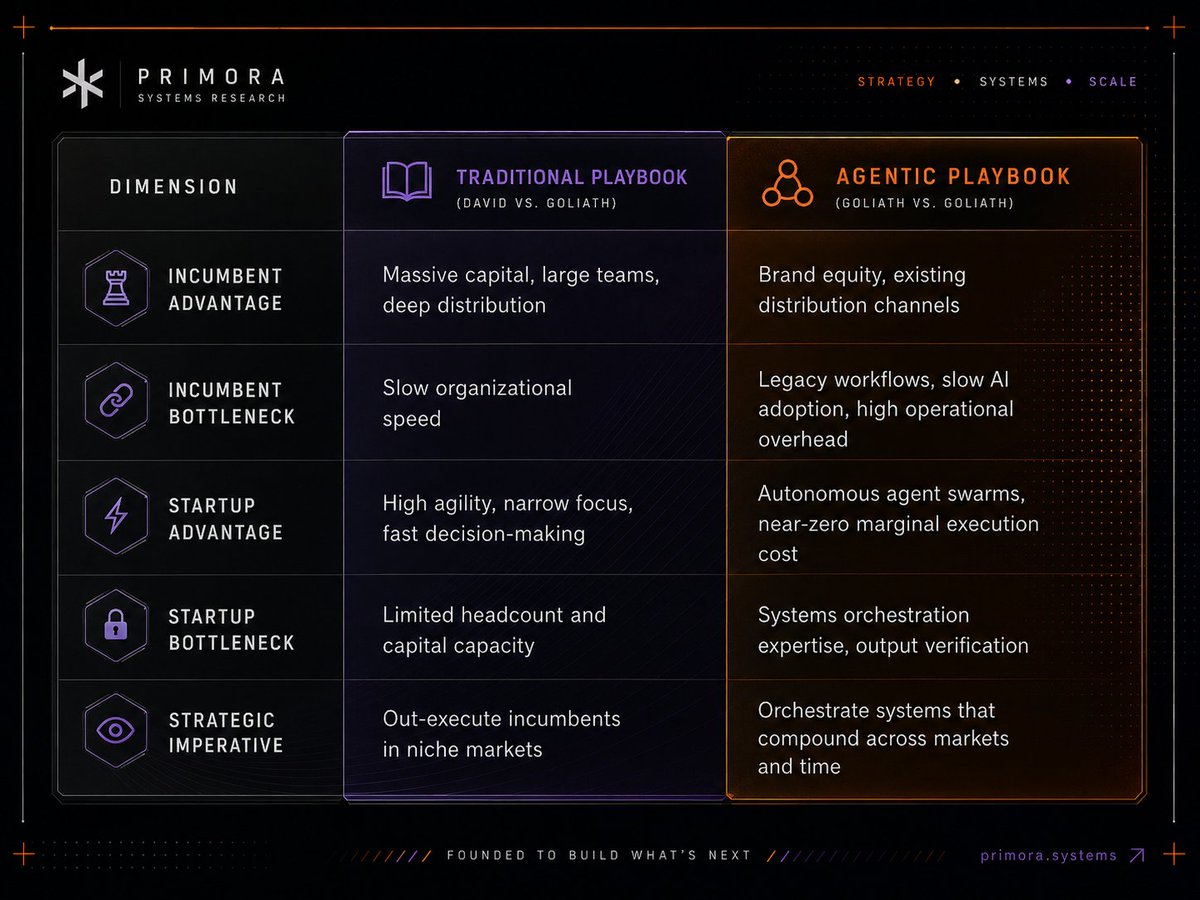
In this environment, small teams operating on modern AI infrastructure can match the execution breadth of large enterprises. The competitive advantage shifts toward founding teams that can build, direct, and audit agentic workflows faster than incumbents can refactor legacy processes.
Technical Leadership: From Line-by-Line Code to Agent Swarms
The technical skill set required of software engineering founders is undergoing a structural evolution. While computer science fundamentals remain vital, writing syntax line-by-line is no longer the primary leverage point for software creation.
Wang highlighted that technical leadership now centers on systems orchestration. Founders must transition from manual execution to designing higher-order architectures that govern autonomous multi-agent networks.
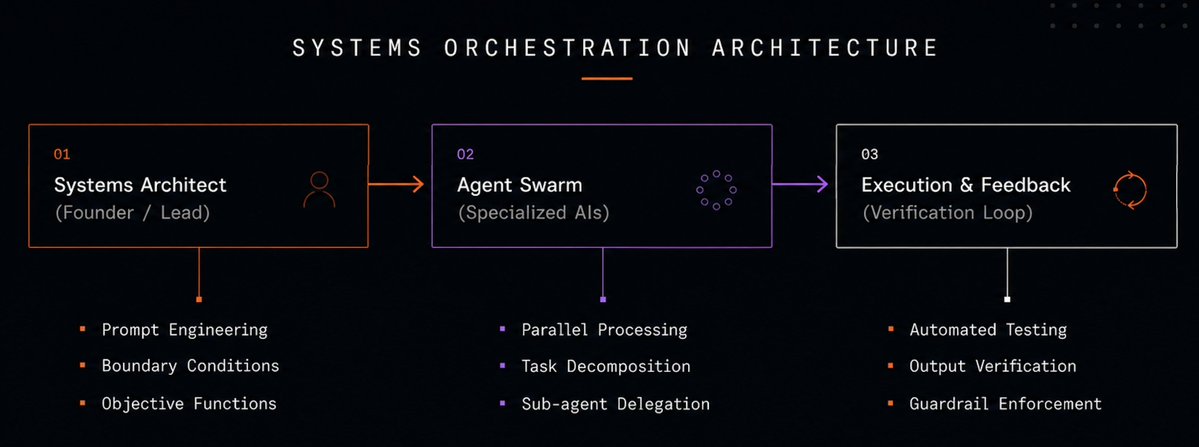
Core Engineering Responsibilities for AI-Native Founders
- Workflow System Design: Establishing clear operational bounds, task decompositions, and contextual inputs for autonomous multi-agent systems.
- Orchestrating Agent Swarms: Structuring task delegation across networks of specialized agents operating concurrently across multi-step technical pipelines.
- Verification Infrastructure: Building deterministic evaluation frameworks, automated test suites, and guardrails to ensure agent output meets production standards.
Systems architecture and workflow verification have superseded manual code writing as the definitive technical leverage for founding teams.
Product Strategy: Personal Superintelligence as an Agency Expander
In addressing his role leading Meta’s Superintelligence Labs, Wang outlined a product philosophy centered on personal superintelligence.
Unlike enterprise paradigms designed to centralize control within proprietary corporate platforms, personal superintelligence aims to place highly capable, contextualized models directly into the hands of individual users.
"Personal superintelligence acts as an expander of human agency rather than a centralizing force."
For founders and product strategists, this paradigm introduces three core operational implications:
- Democratized Leverage: Advanced technical, analytical, and execution capabilities become standard baseline utility for individual operators.
- Expanded Founder Bandwidth: Individual builders can execute across product design, backend architecture, and go-to-market strategies without scaling headcount early.
- Decentralized Innovation: Product differentiation shifts away from access to basic models toward user-centric design, workflows, and proprietary execution loops.
Market Positioning: Building Internal Conviction Amid Market Noise
Rapid technological shifts naturally produce market noise, consensus-chasing, and capital concentration around surface-level wrapper applications. Wang cautioned founders against relying on external validation or venture consensus when selecting market problems to address.
Historically, the most durable technology companies were started during periods when their core thesis was considered unsexy, impractical, or unpromising by mainstream market participants.
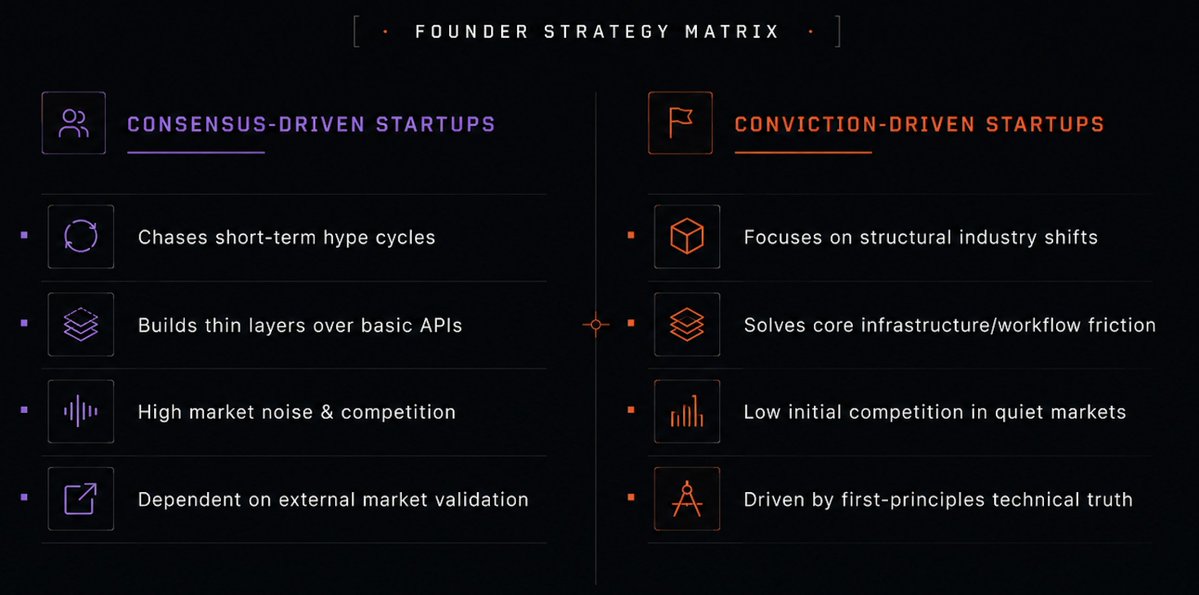
Framework for Developing an Internal Compass
- First-Principles Evaluation: Base technical and product assumptions on underlying capabilities rather than prevailing industry narratives.
- Focus on Unpopular Friction: Resolve fundamental bottlenecks in infrastructure, developer tooling, or industry workflows that mainstream attention overlooks.
- Sustain Execution in Quiet Markets: Build robust architectures and refine product-market fit continuously when public attention moves elsewhere.
Execution Checklist for Founders
To apply the strategic principles outlined by Alexandr Wang at YC Startup School 2026, founding teams should evaluate their operational strategy across three core areas:
- Audit Operational Workflows: Identify internal execution tasks, from code generation and testing to market research, that can be transitioned to specialized AI agent swarms.
- Refactor Technical Infrastructure: Shift engineering focus from manual execution to verification frameworks, automated testing loops, and agent guardrails.
- Anchor on Unpopular Problems: Ensure product roadmaps address deep infrastructure, workflow, or technical bottlenecks rather than short-term market trends.







Build beyond the current cycle
Markets move. Interfaces evolve. Incentives shift. What endures is structure. If your ambition extends past momentum,