The Immutable DNA of Great Founders: 21 Years of Y Combinator Insights
Two decades of YC data reveal a clear pattern. The technology changes but the founder DNA does not. Here is what formidability, fear, and obsession actually look like in practice.




The ecosystem surrounding early-stage technology companies has undergone a radical transformation over the past two decades. Where founders once raised seed capital to build basic social utilities or simple consumer web applications, modern entrepreneurs are tackling industrial-scale challenges, from curing rare cancers to orchestrating autonomous cargo logistics.
Yet, despite this massive expansion in capital, scope, and technical complexity, the underlying DNA required to build and scale a category-defining company remains fundamentally unchanged.
Examining two decades of data and founder trajectories from Y Combinator (YC) reveals a clear pattern: while technology cycles shift from mobile to cloud to artificial intelligence, the operational dynamics, psychological traits, and strategic inflection points that govern startup success follow timeless principles.
The Evolution of Ambition: Why Modern Startups Tackle Harder Problems
A common misconception among market observers is that early-stage venture creation has stagnated or become incremental. In reality, the baseline ambition of high-performing founders has escalated dramatically.
In the mid-2000s, building a startup primarily meant deploying software with minimal infrastructure costs to solve localized digital friction. Today, software is merely the operational layer for companies attempting to reshape physical industries, biological sciences, and global supply chains.
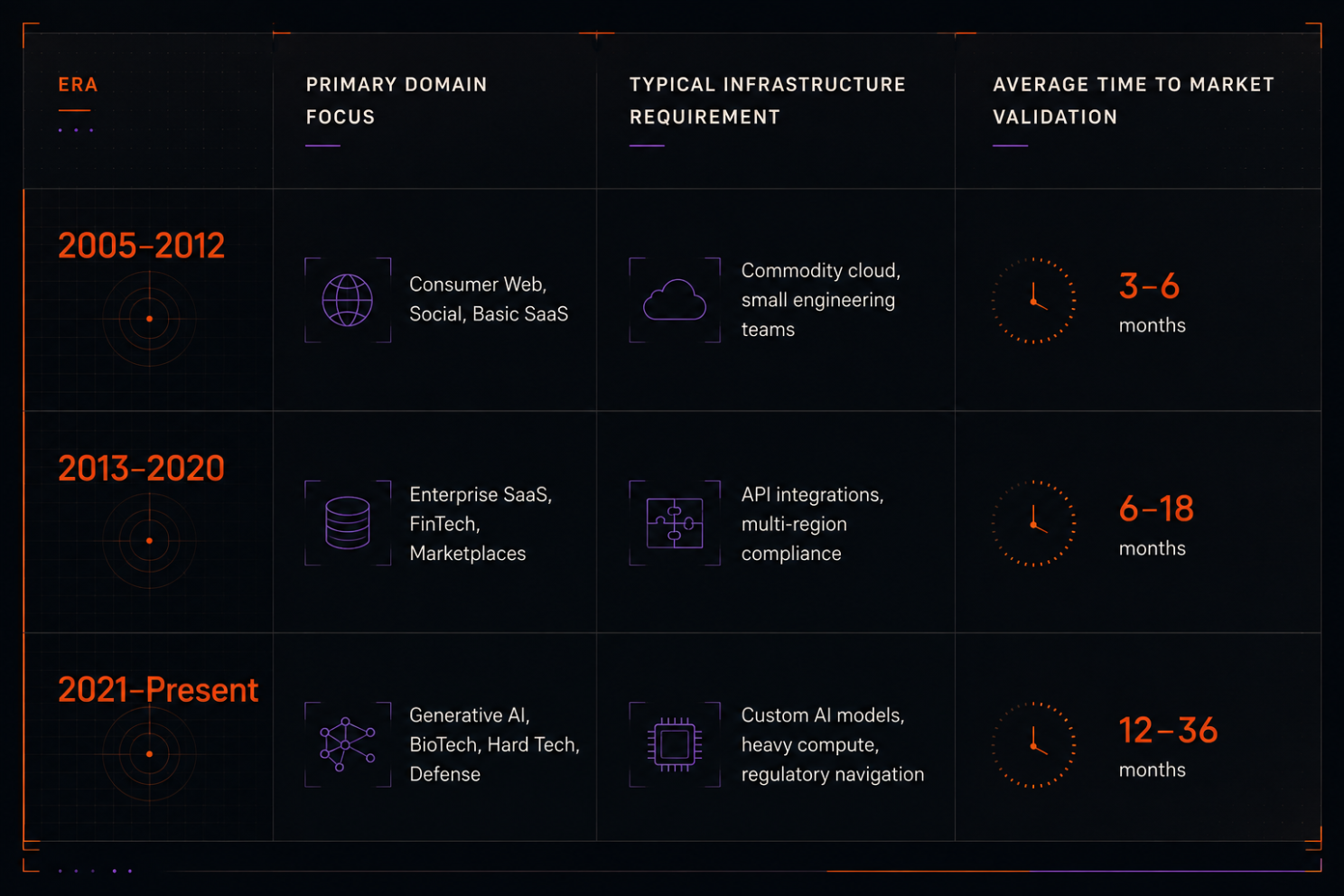
This elevation in scope changes the operational burden on founders. Building a company capable of delivering autonomous hardware or novel therapeutics requires capital efficiency alongside deep domain execution from day one.
The Anatomy of a Formidable Founder
When evaluating what enables a founder to navigate extreme market friction, traditional credentials, such as elite academic degrees or corporate tenure, persistently fail as predictive metrics. Instead, sustained execution relies on a specific psychological profile: formidability.
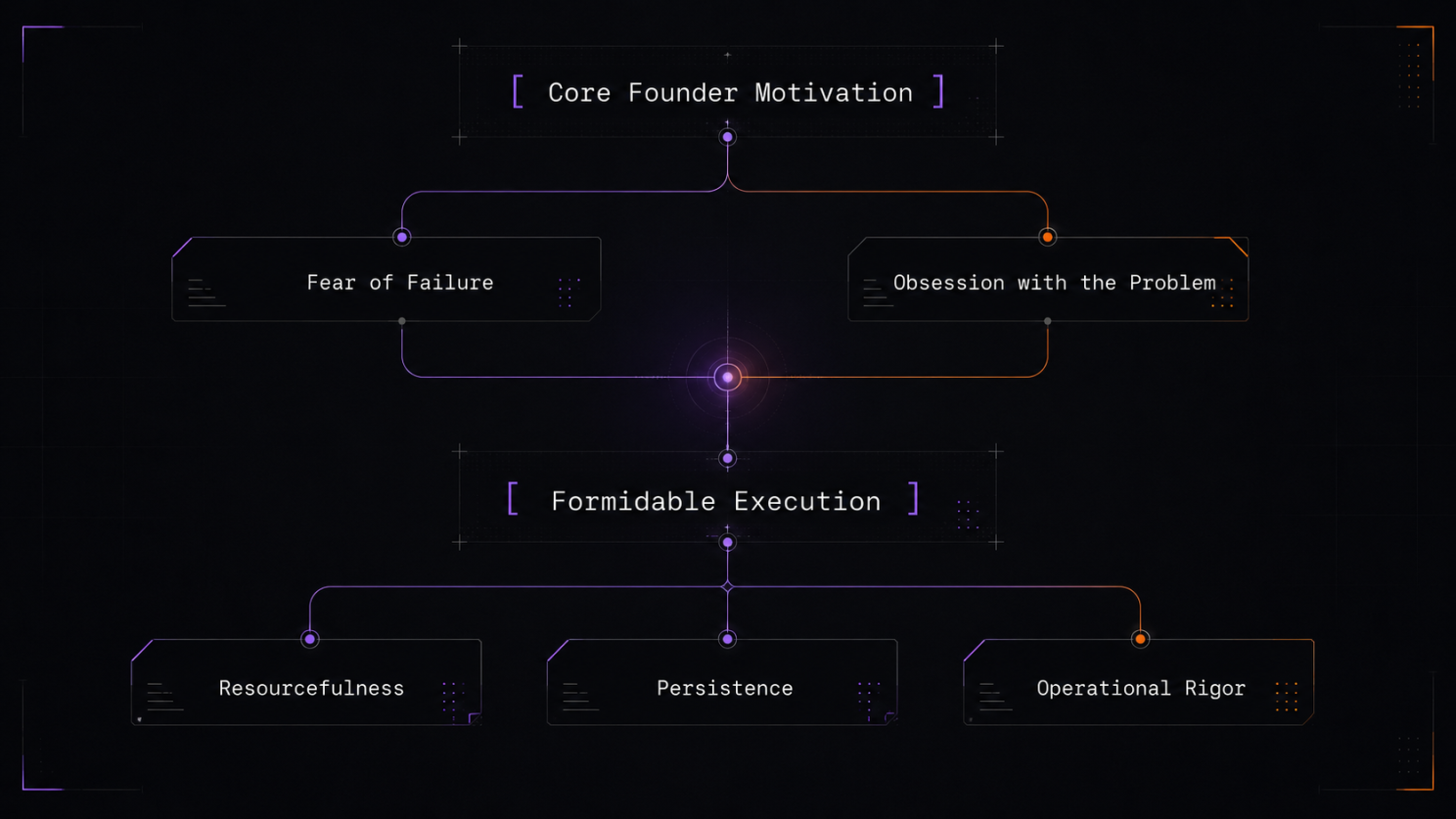
A formidable founder is defined not by polish or charm, but by an unrelenting capability to secure outcomes despite severe resource constraints and structural obstacles.
Key Drivers of Formidable Founders
- The Psychology of Fear: Contrary to the popular narrative that top entrepreneurs are driven purely by vision or financial gain, many are propelled by an acute fear of failure. This anxiety translates into operational speed, paranoia regarding product quality, and rapid response to market signals.
- Obsession Over Prestige: Starting a company remains the least efficient path to institutional status. Formidable founders are indifferent to artificial prestige; they are focused on solving specific, complex operational disasters.
- Relentless Resourcefulness: In high-stakes situations, formidable operators consistently find non-obvious paths to secure capital, engineering talent, and early customer commitments.
"Being beautiful is not enough. The obstacles are too fearsome for mere beautifulness to do it."
Navigating Paradigm Shifts: The Jagged Frontier of AI
Building a enduring company requires understanding technological inflection points. The current shift driven by artificial intelligence presents a unique challenge to conventional software development models.
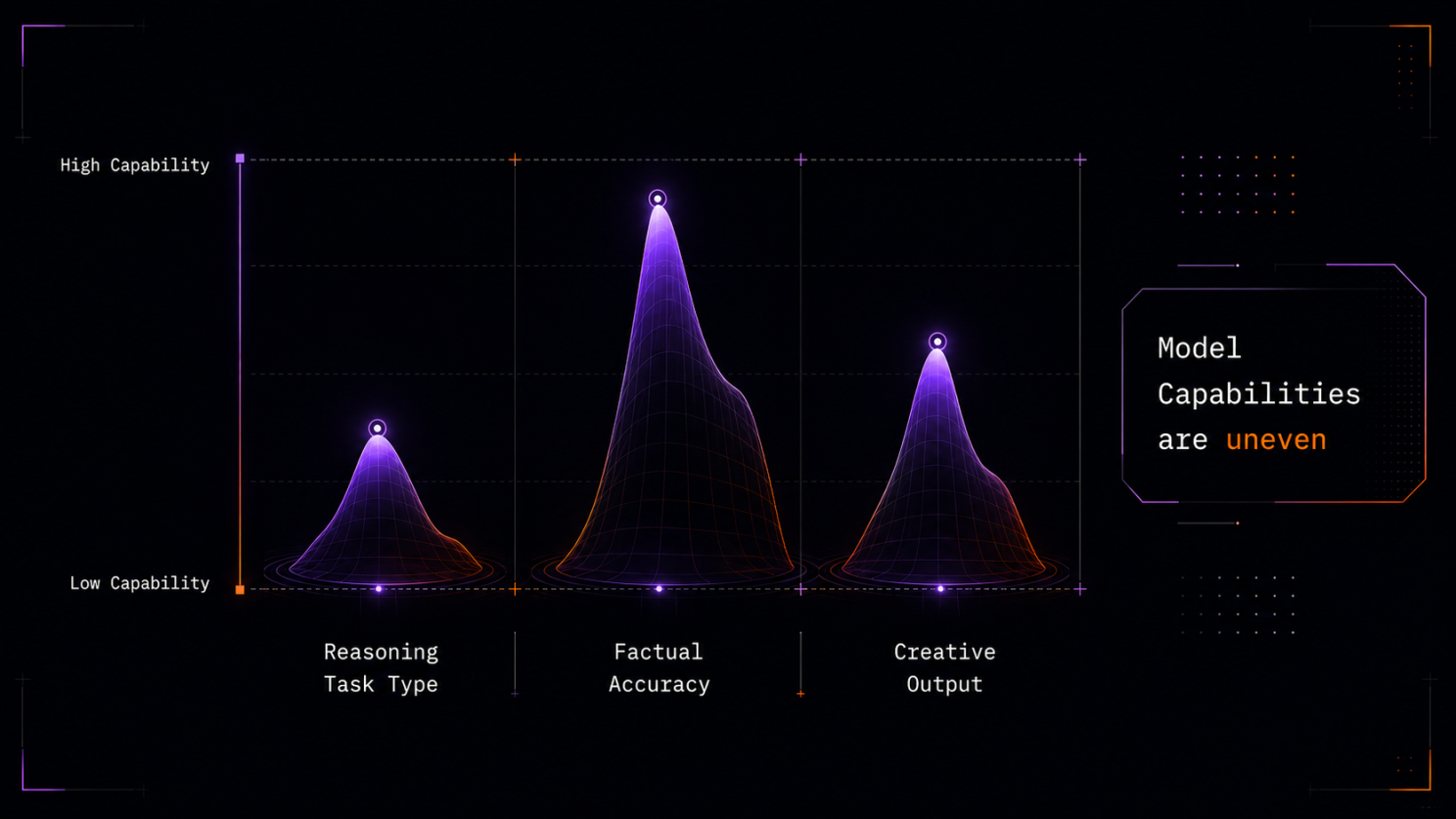
Unlike previous computing paradigms that evolved linearly from low capability to high reliability, advanced AI models operate across a "jagged frontier.
Strategic Implications for Founders
- Non-Linear Model Progression: Intelligence models frequently exhibit human-like reasoning and creativity in complex domains while simultaneously failing at basic, deterministic logic. Founders must design product architectures that abstract these inconsistencies away from the end user.
- The Platform Shift Advantage: Market leaders are rarely displaced through direct head-on competition. Disruption occurs when underlying technology shifts so profoundly that incumbent business models, sales motions, and technical stacks become liabilities.
"The way you make a new Google is not by attacking them head-on. You have to wait for things to change so much that their model is obsolete."
The Scaling Constants: What Never Changes
While external factors such as venture capital availability, technology platforms, and go-to-market channels fluctuate, the internal dynamics of scaling a startup remain constant.
1. Peer Density and Accountability
Scaling effectively requires high-density environments where peer performance sets the baseline pace. Early-stage cohorts create informal benchmarks, forcing teams to maintain high execution speeds during periods of ambiguity.
2. Early Internal Liquidity
Platforms that enable founders to sell directly to peer networks, often referred to as internal cohort demand or "YC GDP" provide critical early feedback. This environment allows teams to refine positioning, fix technical bugs, and achieve initial product-market fit before scaling outward to broader enterprise markets.
3. Execution Rigor Over Scale
Scale does not alter the fundamental mechanics of business building. The necessity of listening directly to users, shipping iterate fixes rapidly, and maintaining lean operating budgets remains identical whether a company has five employees or five hundred.
Building and scaling a high-impact startup is ultimately an exercise in persistence against structural odds. While tools, frameworks, and target markets evolve across decades, the core determinant of success remains fixed: dedicated, formidable teams leveraging technical shifts to solve real human and business problems. As technology continues to open new frontiers, the founders who build enduring institutions will be those who combine maximum ambition with disciplined operational execution.







Build beyond the current cycle
Markets move. Interfaces evolve. Incentives shift. What endures is structure. If your ambition extends past momentum,