The Founder's Manual: How DoorDash Built a Logistics Giant From the Physical World Up
DoorDash didn't start with algorithms. It started with four founders taking orders on a personal cell phone. Here's what Tony Xu's hands-on playbook teaches about building in the physical world.



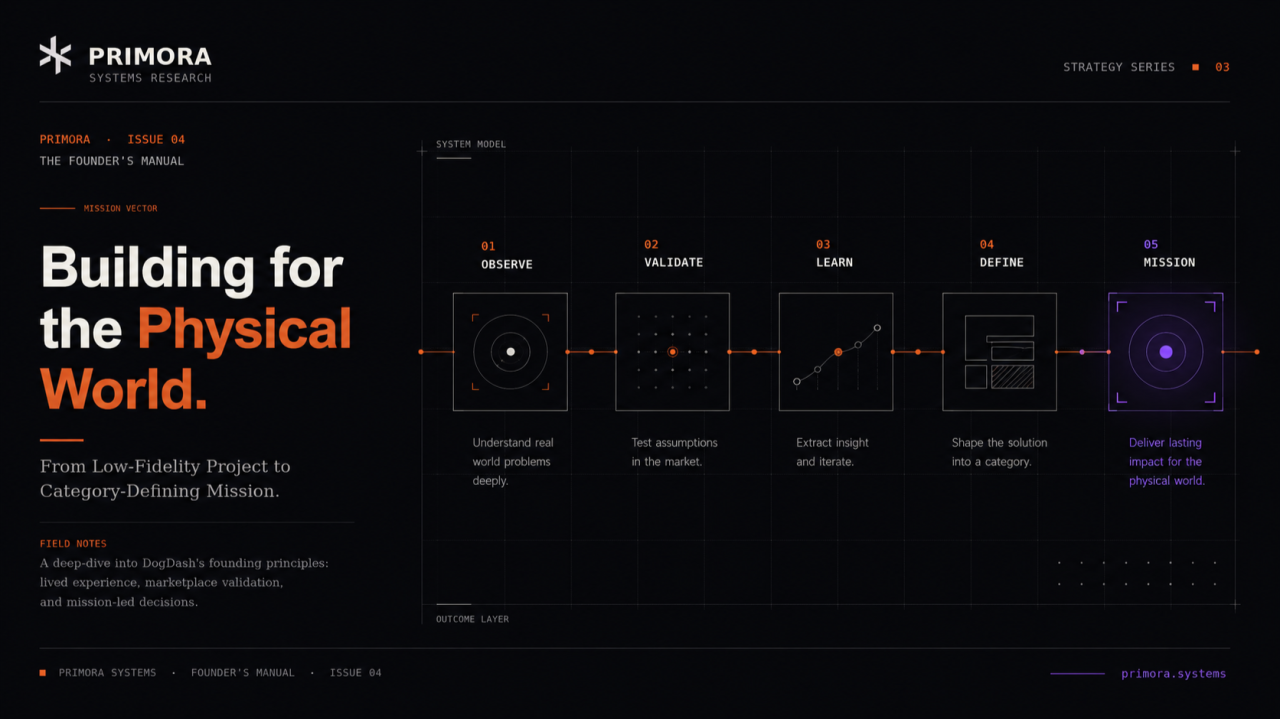
Every category-defining company starts not as a grand enterprise, but as a messy, uncertain project. Long before DoorDash became a household name processing millions of deliveries a day, it was four founders sitting in a room at Stanford, staring at a static HTML page, waiting for a personal cell phone to ring.
To build something that lasts in the physical world, you can’t rely solely on clever code or slick pitch decks. You have to get your hands dirty. Here is how Tony Xu and his co-founders transformed a low-fidelity experiment into a logistics giant, and the principles you can use to build your own mission.
Do the Work: Become the First Laborer
When most founders want to understand a market, they send out surveys or hire research firms. But surveys only tell you what people think they want. To uncover what they actually need, you have to immerse yourself in their daily reality.
In the early days of DoorDash, the founders didn’t just observe local merchants, they worked for them. They made salads, organized inventory, and did accounting for small business owners. During one of these shifts, they noticed a physical booklet sitting on a desk filled with turned-down delivery orders. That was the "unraveled thread": merchants were actively losing business because they couldn't handle delivery logistics.
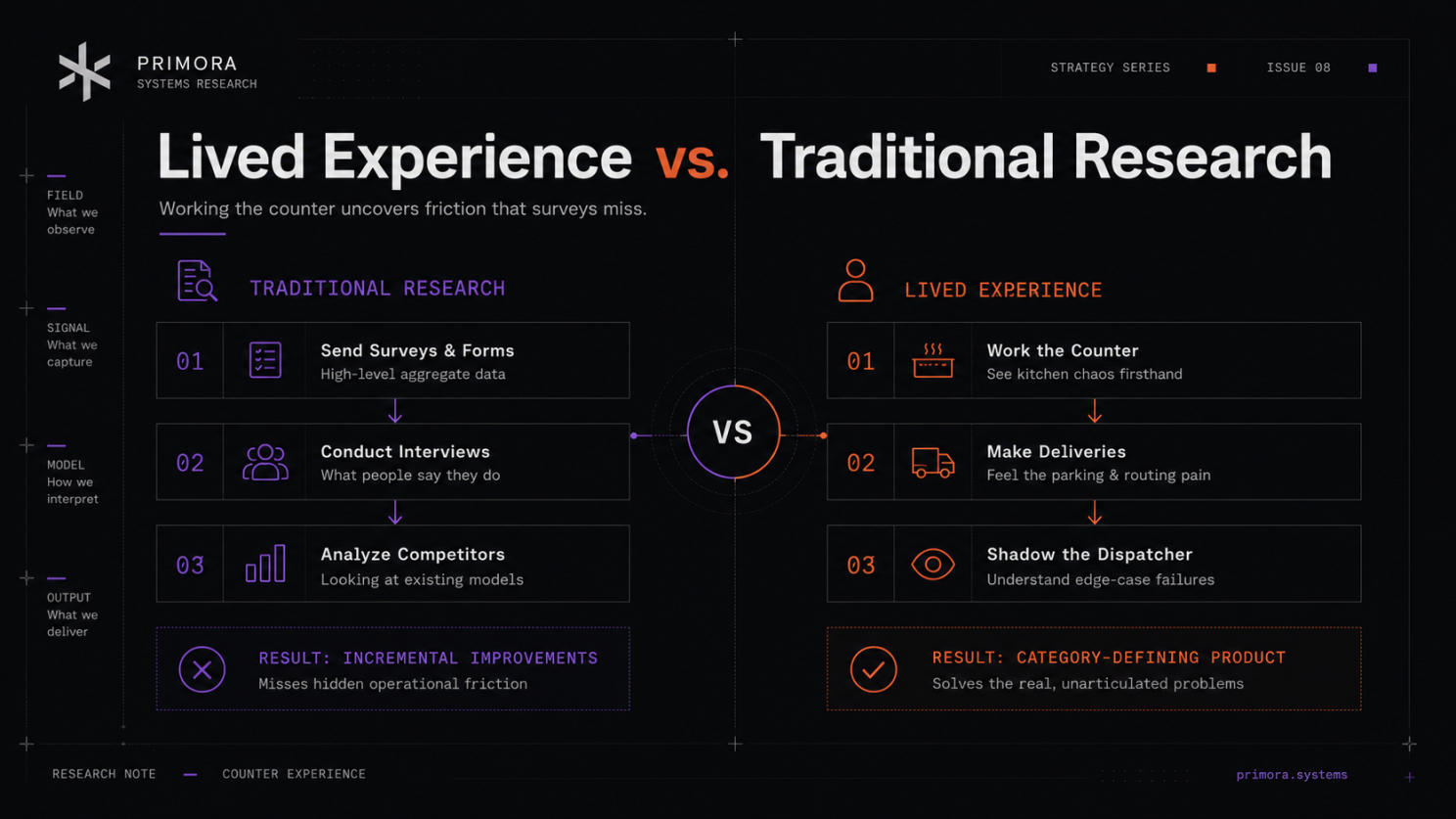
The First Laborer Rule: In the beginning, you are the operations team. Every DoorDash co-founder drove deliveries, dealt with frustrated customers, and solved logistics errors in real time. Running the physical steps yourself builds an unshakeable intuition for the product that no dashboard can recreate.
Validate the Project Before the Company
Before spending months building complex backend systems or hiring a team, treat your venture as a low-stakes "project." Focus on answering two foundational questions:
- Do you genuinely enjoy working with your co-founders?
- Do you love the problem enough to stick with it when things break?
When DoorDash launched under its original name, PaloAltoDelivery.com, it didn't have an app, an automated dispatch algorithm, or driver tracking. It was a basic webpage with uploaded PDF menus and a Google Voice number routing calls straight to the founders' personal cell phones.
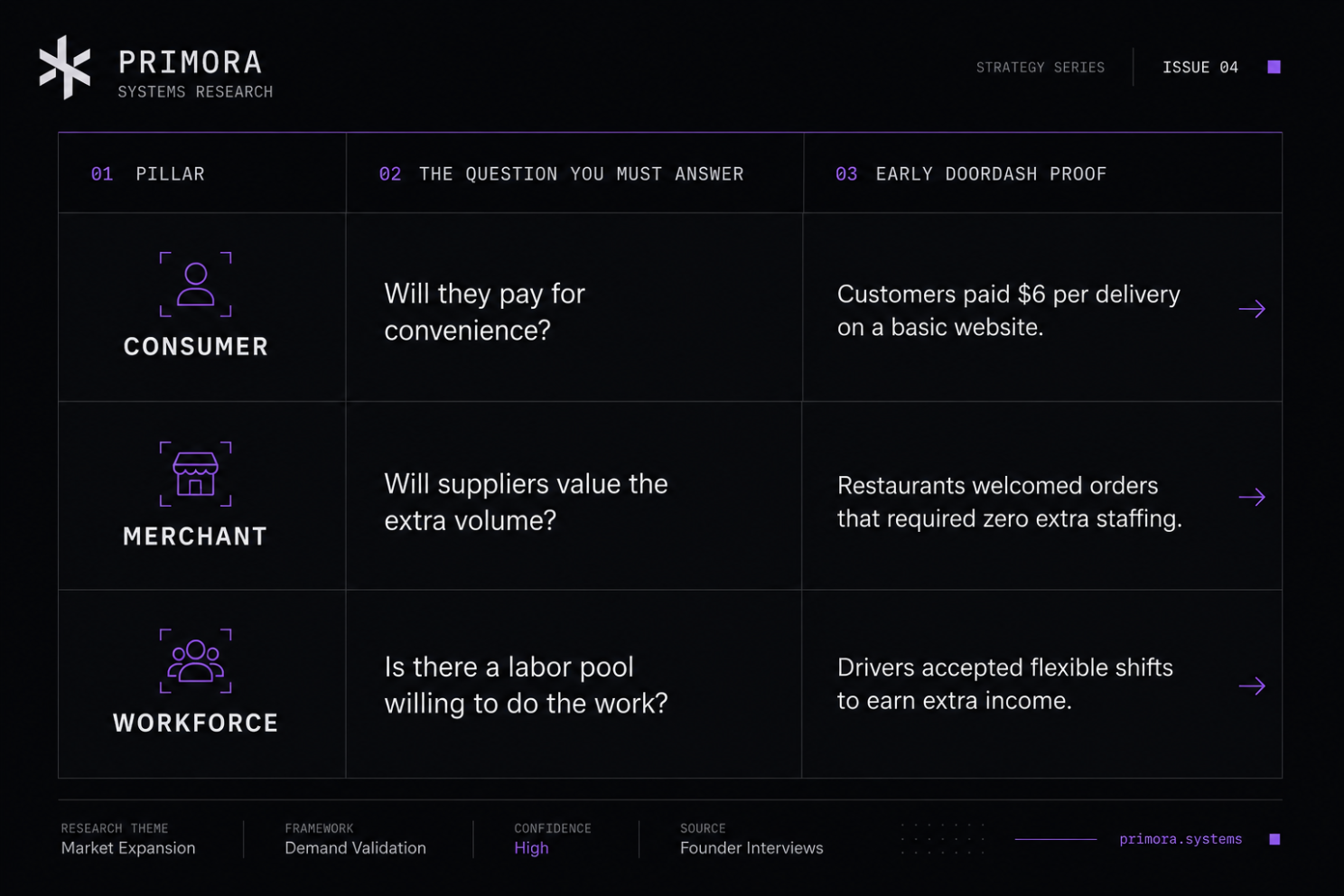
The Three-Pillar Test
For any marketplace or service business to survive, your early low-fidelity MVP must validate three simple economic truths:
Play the Suburban Playbook: Strategic Contrarianism
In tech, conventional wisdom is a magnet for intense competition. When DoorDash entered the market, every major competitor was battling for dense urban centers like San Francisco and Manhattan. The assumption was simple: higher population density equals better efficiency.
DoorDash looked at the data and went the opposite direction:
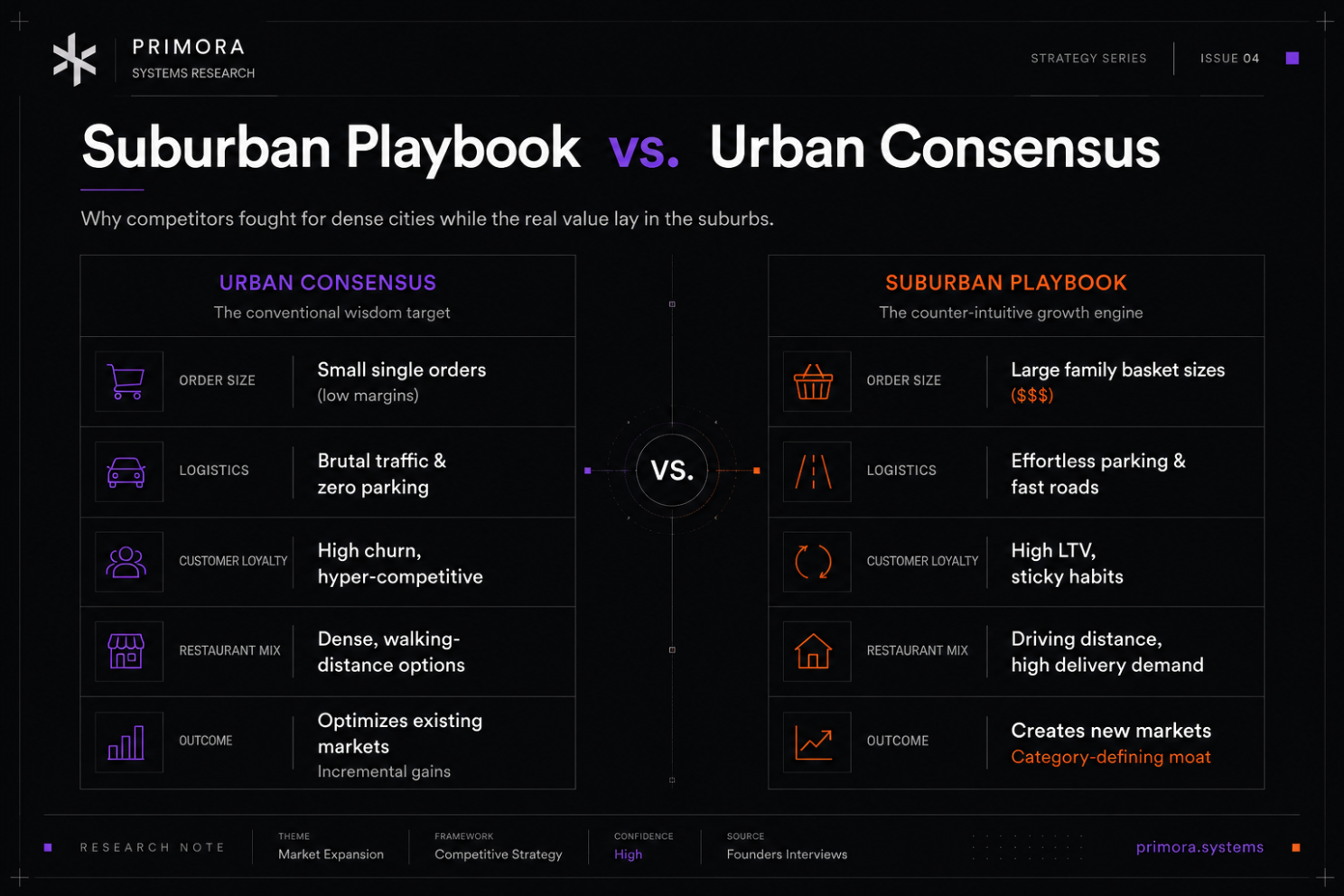
While city deliveries often meant small, single-person lunch orders stuck in traffic, suburban deliveries meant large family dinners. The basket sizes were bigger, parking was effortless, and the distance between restaurants and homes created a genuine need for convenience.
By prioritizing customer obsession over investor consensus, DoorDash unlocked superior unit economics where everyone else saw low-density risk.
Master the "One Yes" Rule and Build Conviction
Building in the physical world is messy, expensive, and filled with rejection. In the early fundraising rounds, DoorDash faced hundreds of rejections from investors who thought delivery was a solved problem or a low-margin trap.
Remember: Fundraising isn't a consensus vote, it’s a conviction bet. You don't need fifty investors to agree with your vision; you only need one to say yes to unlock the capital required to prove your model at scale.
Holding onto that conviction also means making hard choices when things go wrong. During an early launch crisis, a series of botched orders threatened to destroy customer trust. Instead of conserving capital, the founders refunded affected customers, a decision that ate up roughly 40% of the company’s remaining cash reserves.
It was a painful hit to the bank account, but it established a permanent cultural principle: be obsessed with the customer, not the competition.
Anchor to an Eternal Mission
A mission isn't a marketing slogan; it's an operational framework for making hard decisions in times of crisis. An "eternal mission" like DoorDash’s core goal to grow the GDP of every local economy, outlasts product launches, down rounds, and IPOs.
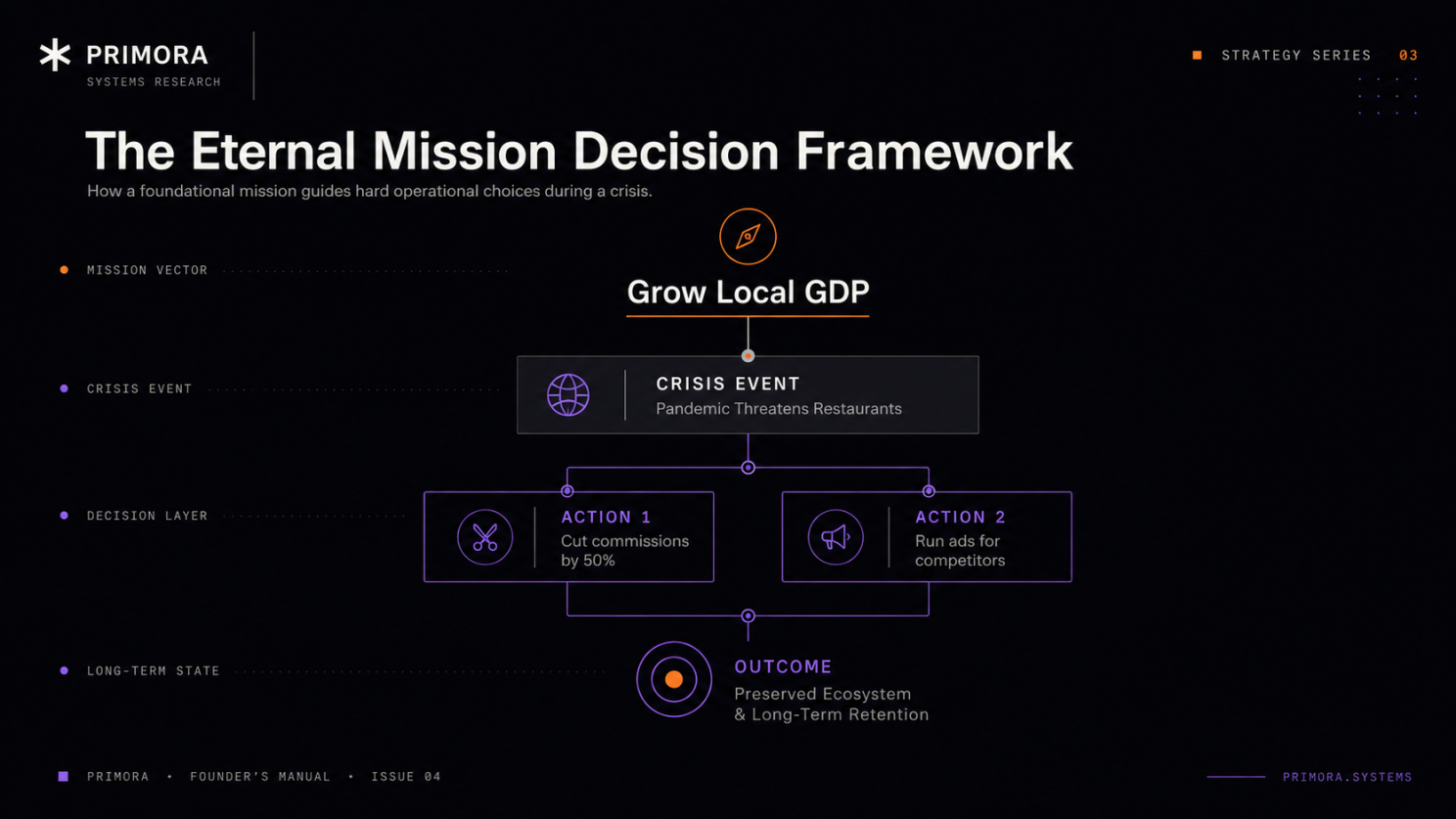
During the height of the COVID-19 pandemic, this mission was put to the test. DoorDash voluntarily cut commission rates in half for local restaurants and ran ad campaigns encouraging consumers to order directly from local spots, even if it meant using competing channels. Short-term profits were sacrificed to keep their merchant partners alive, preserving the ecosystem for the long run.
The Road Ahead: The Physical World Opportunity
While much of the current tech narrative is dominated by purely digital software, some of the largest, most enduring opportunities exist at the intersection of bits and real-world operations. Tracking inventory in a neighborhood store, managing local supply chains, or moving goods across a city are complex, physical problems that code alone cannot solve.
If you want to build a category-defining company, stop looking at dashboards from a distance. Step out from behind the screen, do the manual work, and build from the ground up.







Build beyond the current cycle
Markets move. Interfaces evolve. Incentives shift. What endures is structure. If your ambition extends past momentum,